Global Alert: 'Super El Niño' Intensifies, Threatening Unprecedented Climate Extremes
Context mode is active. Hover over any highlighted term to see its definition. Click a nested term to go deeper.
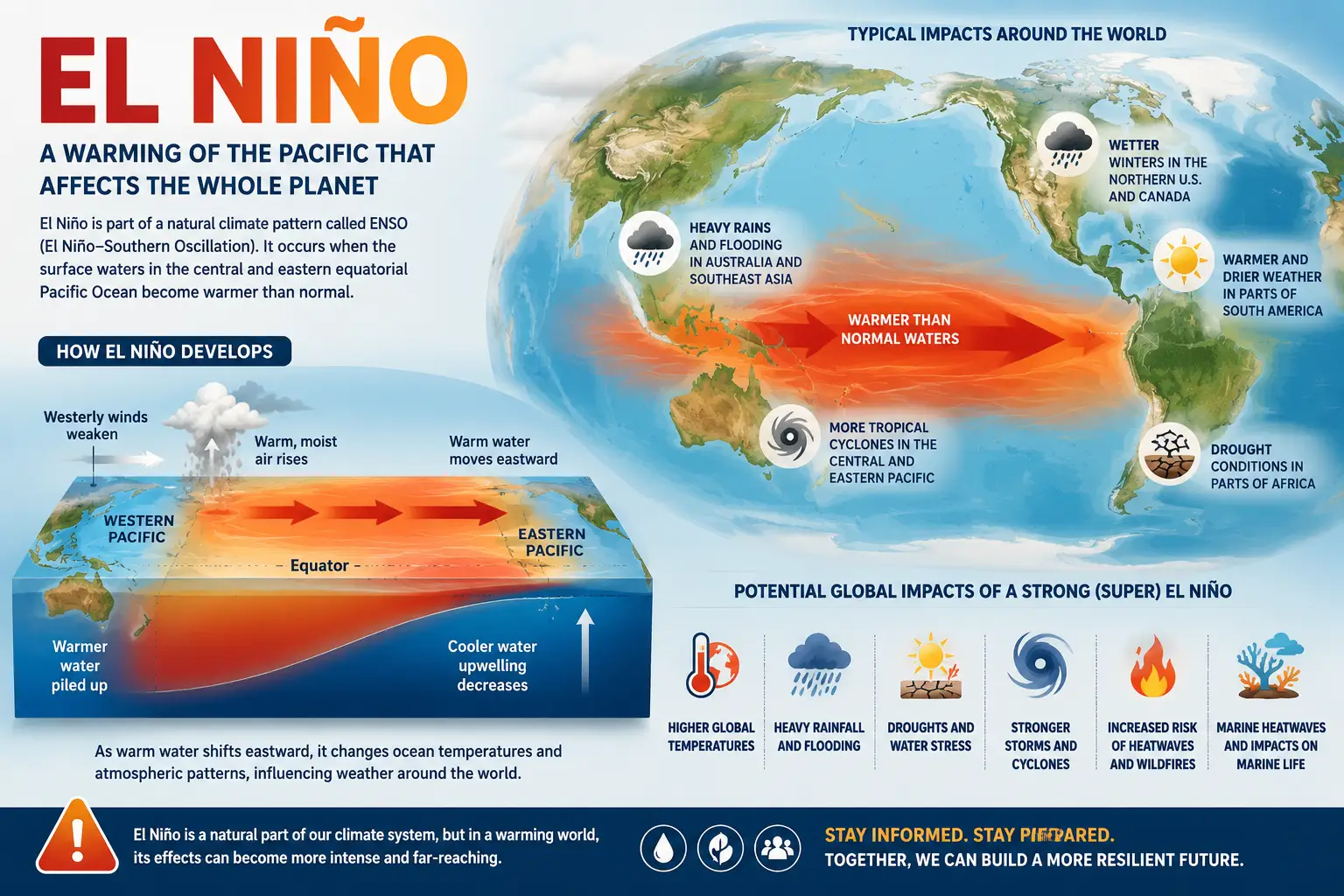
The global climate community is sounding the alarm as El Niño rapidly intensifies, with meteorological experts now projecting a significant probability – exceeding 60% – that it will reach 'very strong' or 'super' status by late 2026 and early 2027. This intensifying phenomenon is stacking its immense heat on top of already record-high global sea temperatures, setting the stage for potentially unprecedented weather extremes worldwide. Official forecasts from agencies like the World Meteorological Organization (WMO) and NOAA indicate a consistent and significant warming across the central and eastern equatorial Pacific Ocean, confirming a high-impact trajectory. El Niño, a natural warming of the central and eastern Pacific, profoundly alters global atmospheric circulation, influencing temperature and rainfall patterns across continents. This particular event is drawing concern because of its rapid development and the existing backdrop of a warming planet, threatening to amplify heatwaves, droughts, heavy rainfall, and floods from East Africa to South America and Australia. Some models even suggest this El Niño could become one of the strongest in 140 years, potentially surpassing historical events like 1877-1878, which had devastating global consequences. As this 'super' El Niño is expected to peak between November 2026 and February 2027, governments and humanitarian agencies are stepping up coordination and early warning efforts to prepare for the cascading impacts. Regions like India and Southeast Asia are particularly vulnerable to drought conditions, while parts of the Americas could face increased flooding. The coming months will be critical, as the world navigates not just a powerful natural climate cycle, but one amplified by human-driven climate change.