Global LNG Market Braces for Winter Shock as Middle East Strife, Low Storage Stir Volatility
Context mode is active. Hover over any highlighted term to see its definition. Click a nested term to go deeper.
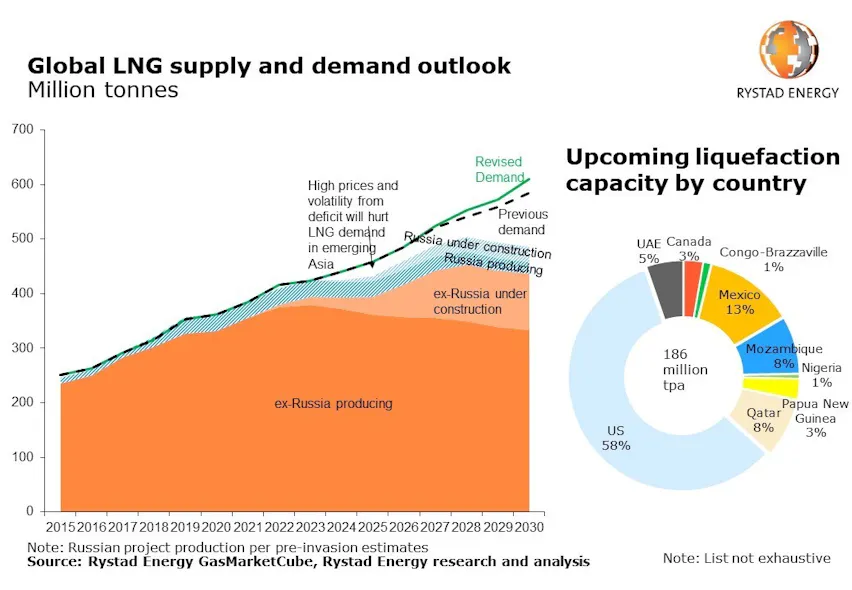
The global liquefied natural gas (LNG) market is facing a precarious winter, reeling from an ongoing Middle East conflict that has severely crippled key supply routes and production. An attack on Qatar's vital Ras Laffan Industrial City facility in March 2026 slashed 17% of its LNG capacity for years, intensifying concerns as Europe struggles with alarmingly low gas storage levels and slow refilling rates, creating a dangerous tightness in global supply. This latest disruption, coupled with Europe's continued efforts to reduce reliance on Russian pipeline gas following the Ukraine invasion, means the continent is heavily dependent on volatile LNG spot market, where prices have already surged by over 140% in Asia due to the Middle East crisis. While the United States has ramped up its LNG export capacity to an unprecedented 17 billion cubic feet per day in the first half of 2026, thanks to major projects like Golden Pass LNG and Corpus Christi Stage 3, this increased supply is still battling to offset the significant outages and strong Asian demand. European gas storage currently sits at only around 48% full, far below historical averages, and is injecting gas at a pace too slow to meet even a relaxed 80% target before winter. As meteorologists eye potential colder-than-average winter conditions in major consuming regions, the delicate balance between constrained supply, surging demand from new US facilities and a recovering Asia, and Europe's critical need to refill storage will dictate price movements. Market analysts project Henry Hub prices could climb significantly with a cold winter, pushing global gas benchmarks higher and risking further energy inflation. The pace of geopolitical de-escalation in the Middle East and the resilience of existing LNG infrastructure will be crucial in preventing a full-blown energy crunch as the colder months approach.