Hong Kong's Flagship University Attracts Global Students Amid Shifting Geopolitics
Context mode is active. Hover over any highlighted term to see its definition. Click a nested term to go deeper.
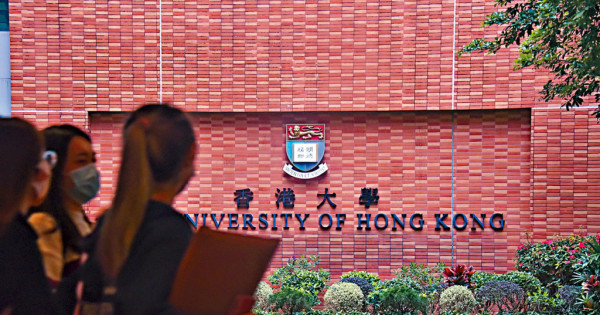
The University of Hong Kong (HKU) has welcomed 1,800 non-local undergraduate students for the current academic year, a significant move reflecting the city's pivot amidst global power shifts. Notably, over 700 of these students are from outside mainland China, marking a substantial 77 percent increase from the previous year, as global political tensions prompt students to reconsider traditional study destinations like the United States. This surge places Hong Kong as an increasingly attractive alternative in the international higher education landscape. This influx aligns with the Hong Kong SAR Government ambitious strategy to position itself as a premier international education hub, outlined in Chief Executive John Lee 2026 Policy Address and the city's First Five-Year Plan (2026-2030). Authorities have dramatically raised the non-local student quota for publicly funded universities to 40 percent, and up to 50 percent for self-financing places, effective this academic year. This aggressive push aims to counter a recent 'brain drain' from the city and diversify the talent pool, moving beyond its historical reliance on mainland Chinese students, by actively recruiting from regions like Central Asia and the Middle East. Looking ahead, HKU and other University Grants Committee (UGC)-funded institutions are planning over 160 recruitment activities globally for the 2026/27 academic year to sustain this momentum. While the university acknowledges potential physical constraints due to campus saturation, new programs like the Bachelor of Arts Elite Programme and a dual-degree with UC Berkeley are set to enhance its offerings. Hong Kong's commitment to boosting student hostel supply and expanding talent schemes like the Top Talent Pass Scheme (TTPS) signal a long-term vision to cement its global academic standing despite ongoing geopolitical complexities.