Houthis Arming with Chinese Missile Tech, Threatening Saudi and Israel
Context mode is active. Hover over any highlighted term to see its definition. Click a nested term to go deeper.
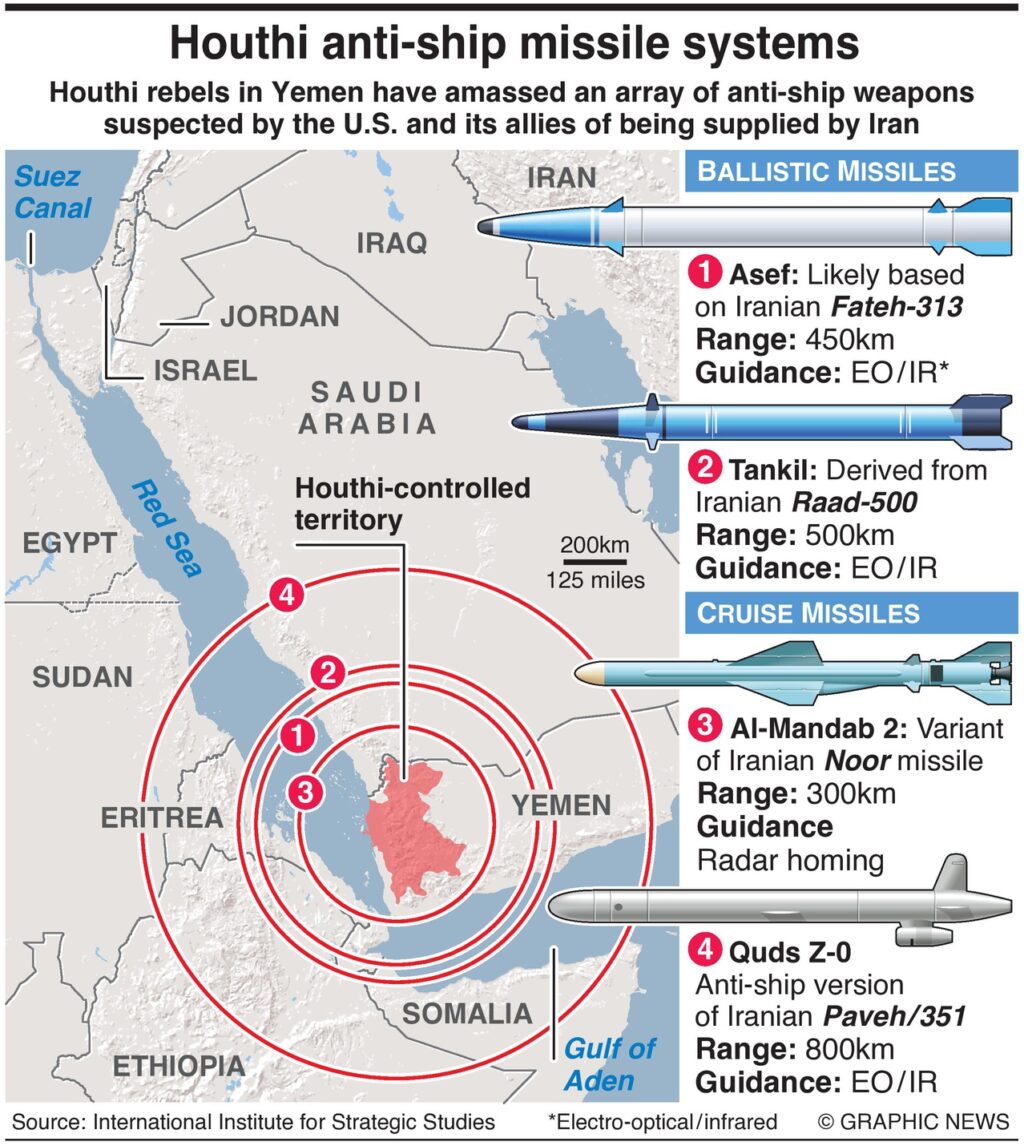
Yemen's Houthis are making a significant leap in their military capabilities, actively using Chinese-sourced parts to develop advanced medium-range ballistic missiles, according to a recent report by Conflict Armament Research and The Wall Street Journal. This new push allows the Iran-backed group to build its own version of Iran's formidable Kheibar Shekan missile, a precision-guided weapon that could strike anywhere in Saudi Arabia and Israel with its projected range of up to 1,900 miles. This development marks a serious escalation, granting the Houthis indigenous manufacturing power and a more potent threat to regional stability. This technological advance comes amidst already heightened tensions, with the Houthis recently escalating missile and drone attacks on Saudi Arabian airports and critical oil infrastructure, effectively reigniting a civil war that had seen an unofficial ceasefire since 2022. The group's enhanced missile capabilities also amplify concerns over Red Sea shipping, a crucial global trade route they have repeatedly targeted, drawing international condemnation and US military retaliation. Despite a UN arms embargo, Chinese firms are reportedly the primary suppliers of these components, including specialized parts clearly meant for missile production, challenging international efforts to curb the group's arsenal. The implications are far-reaching: a more self-sufficient and heavily armed Houthi movement deepens the complex Iran-Israel proxy conflict and severely complicates security for key US allies in the Middle East. Observers will be closely watching for any diplomatic efforts to reinforce the UN embargo and for potential counter-measures from Saudi Arabia and Israel, as the Houthis' ability to domestically produce such potent weapons could redefine the power balance in the volatile region. This new phase of conflict risks further disrupting global supply chains and energy markets.