IITs Pilot Adaptive Testing for JEE Advanced; Aims to Curb Coaching Culture by 2030
Context mode is active. Hover over any highlighted term to see its definition. Click a nested term to go deeper.
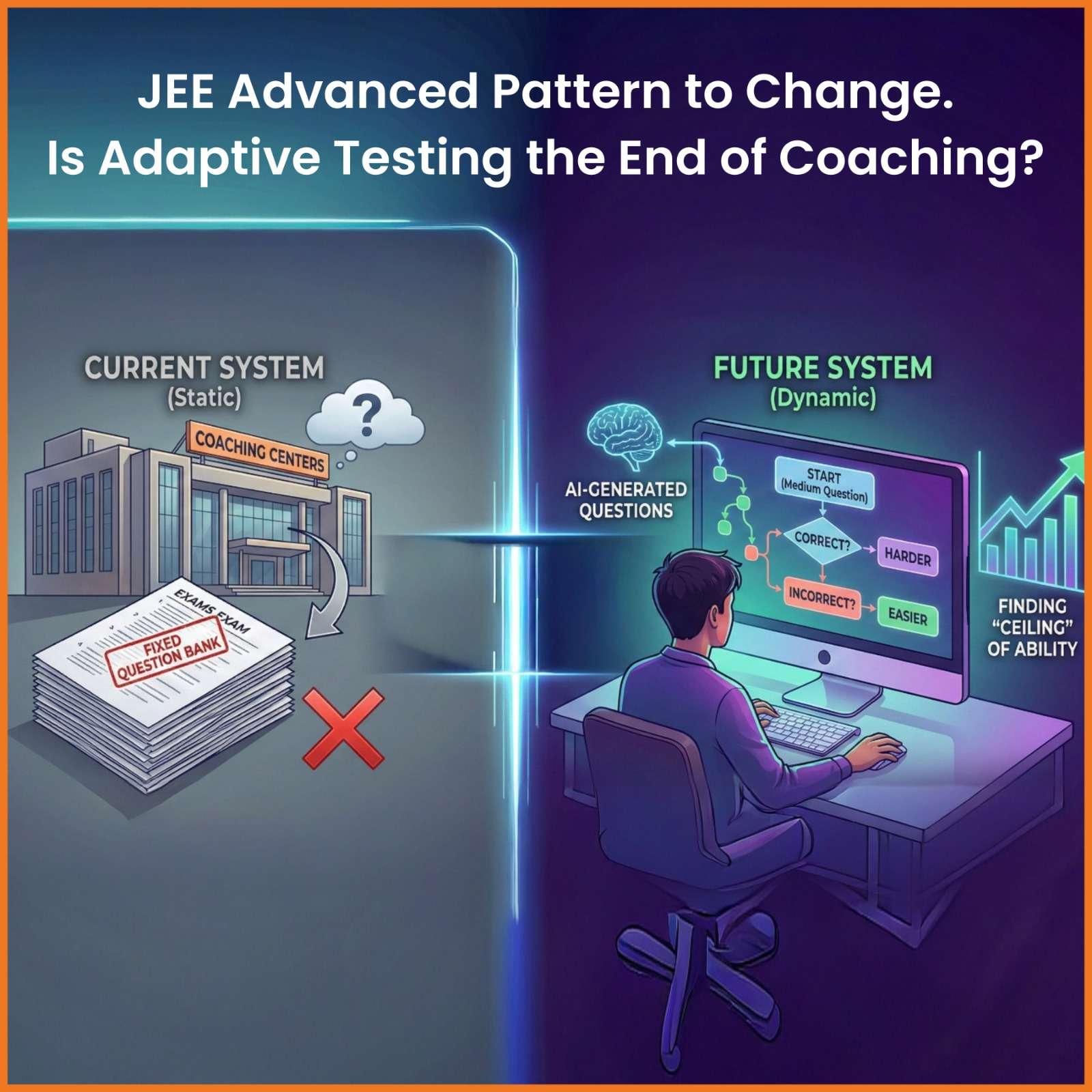
India's premier engineering institutes, the IITs, are actively piloting a new 'adaptive testing' system for the Joint Entrance Examination (JEE) Advanced, with an ambitious goal to roll it out by 2030. While JEE Advanced 2026 will maintain its traditional format, this significant move aims to reduce students' heavy reliance on coaching classes by making the exam more responsive to individual performance and testing deeper understanding rather than rote memorization. A recent pilot project involved around 4,000 first-year students across various IITs, gathering crucial data to fine-tune the new assessment mechanism. The push for adaptive testing stems from growing concerns within the IIT Council about the existing examination structure's vulnerabilities and the immense emotional and financial stress placed on students and families by the multi-billion dollar coaching industry. IIT Kanpur Director Prof. Manindra Agrawal has been a key proponent, arguing that dynamically adjusting question difficulty based on a candidate's responses can better assess critical thinking and reasoning skills. This reform aligns with the National Education Policy 2020's vision for competency-based assessment and a shift away from memory-focused learning. With data from the pilot currently being processed, the IITs anticipate needing at least three years for further research and validation before a full implementation. A formal announcement regarding the 2030 rollout timeline is expected by early 2027, giving students and the coaching sector ample time to prepare for the potential shift. This long-term transition could fundamentally reshape India's competitive exam landscape, fostering a more equitable and less stressful path for aspiring engineers.