IMO head: Shipping decarbonisation “has started” despite green deal delay
Context mode is active. Hover over any highlighted term to see its definition. Click a nested term to go deeper.
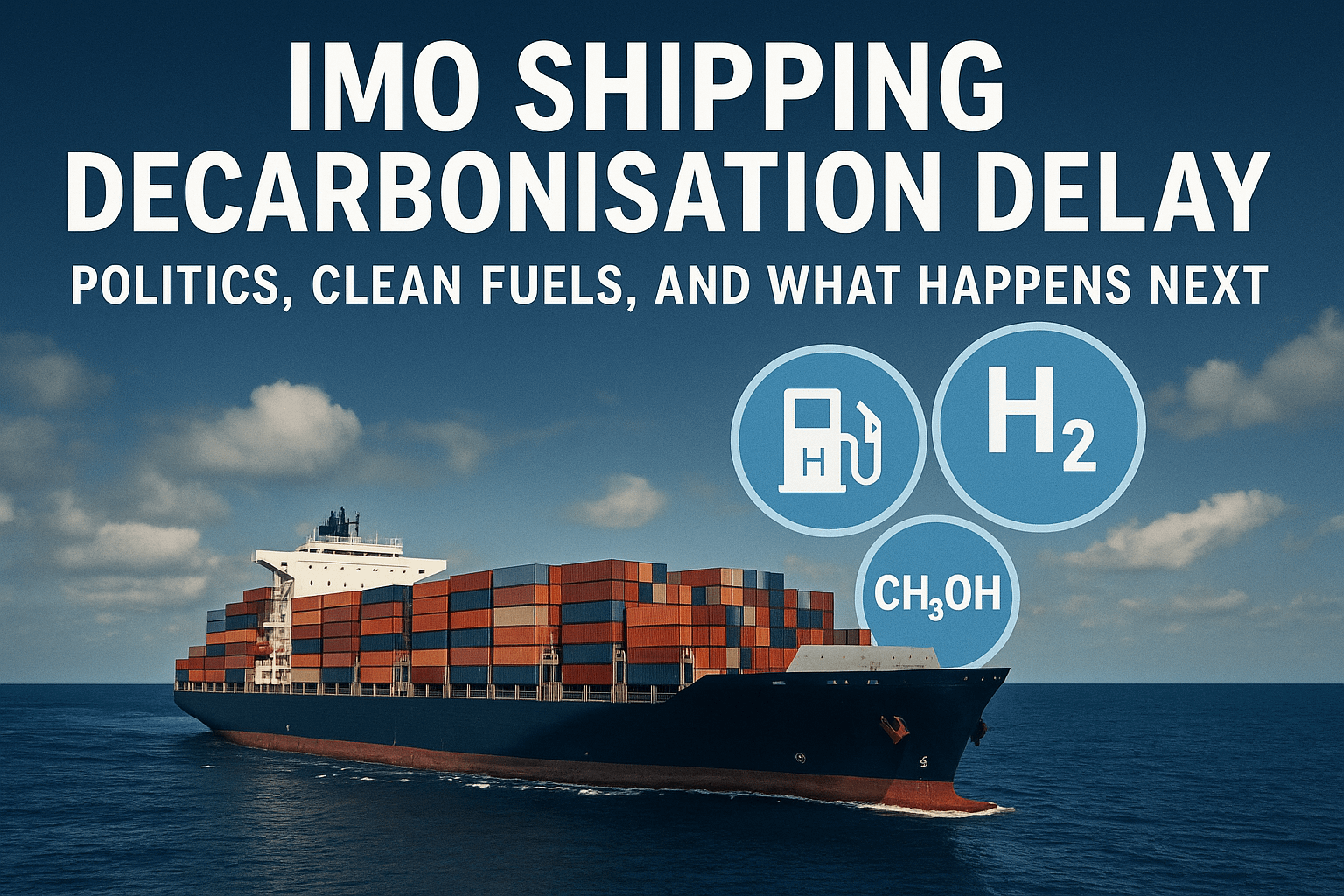
IMO Secretary-General Arsenio Dominguez recently declared that shipping decarbonisation "has started" despite a persistent deadlock among member states on adopting a crucial framework to reach net-zero emissions. His comments follow the International Maritime Organization MEPC 84 meeting in May 2026, where nations confirmed the controversial Net-Zero Framework (NZF) remains the blueprint for future global emissions regulations, even as key players like the United States, Saudi Arabia, and Russia continue to obstruct its formal adoption and push for less stringent alternatives. The global shipping industry, responsible for approximately 3% of worldwide greenhouse gas emissions, urgently needs regulatory certainty to invest in cleaner technologies and alternative fuels. The NZF, provisionally approved in April 2025, proposes a global fuel standard and a carbon pricing mechanism—effectively a tax on emissions—intended to drive this transition and channel funds to developing nations for a just energy shift. However, its formal ratification was dramatically stalled in October 2025 by a US-led alliance citing concerns over economic burdens and the impact on consumers, and this opposition resurfaced forcefully at MEPC 84. This ongoing fragmentation contrasts sharply with the European Union's advancing carbon mechanisms, such as FuelEU Maritime and the EU ETS, which are already imposing significant costs and compliance requirements on vessels calling at EU ports, creating an increasingly complex and uneven global regulatory landscape for shipowners. The path forward remains fraught, with the IMO aiming for formal NZF adoption at a resumed Extraordinary Session on December 4, 2026, following MEPC 85. Two intersessional working group meetings in September and November 2026 are tasked with bridging the deep divides and reconciling alternative proposals that seek to dilute the framework's core carbon pricing elements. The outcome of these negotiations will determine whether the shipping sector finally secures a globally harmonized regulatory roadmap, or if continued delays and compromises will further fragment policy, potentially slowing the transition to zero-emission shipping and increasing investment risks for a sector critical to global trade.