India Eyes BRICS Export Boom to $200 Billion by 2030, But Trade Deficit Looms
Context mode is active. Hover over any highlighted term to see its definition. Click a nested term to go deeper.
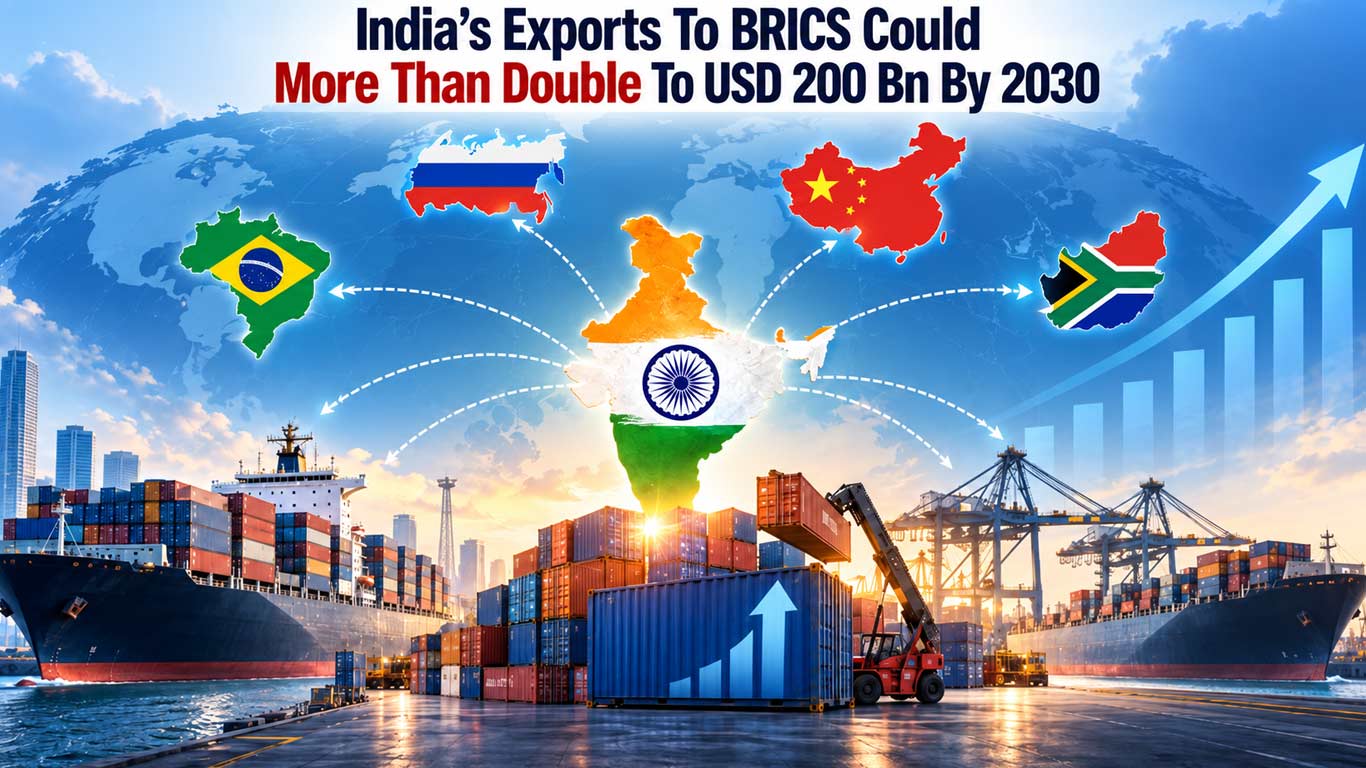
As India hosts the 18th BRICS Summit in New Delhi, a new report by industry body ASSOCHAM forecasts that the nation's exports to BRICS countries could more than double to USD 200 billion by 2030. This ambitious projection comes as India's total trade with the bloc already surged from USD 203 billion in 2020-21 to USD 417 billion in 2025-26, highlighting the growing economic ties within the expanded group. However, a deeper dive into the numbers reveals a widening trade deficit, with India importing significantly more than it exports to its BRICS partners. This crucial summit, where India holds the BRICS Chairship for 2026, is a moment for the nation to champion stronger economic integration and diversify its export markets beyond traditional partners. The ASSOCHAM report identifies promising sectors like engineering goods, pharmaceuticals, textiles, and renewable energy, emphasizing that deeper cooperation could bolster India's access to vital resources, technology, and capital. Yet, the persistent trade imbalance, where imports from BRICS, particularly China and Russia, outpace exports by a wide margin, presents a significant challenge that India aims to address through initiatives like alternative settlement mechanisms and strengthening domestic manufacturing. As leaders convene in New Delhi, discussions are expected to focus on moving from 'representation to results' for the Global South, promoting resilient supply chains, and exploring interoperability in digital payment systems. For India, capitalizing on this export potential and rebalancing trade within BRICS will require concrete strategies for market access, value chain integration, and more balanced commercial engagements. The success of India's Chairship will largely depend on its ability to translate these ambitious goals into tangible outcomes, setting a new trajectory for South-South cooperation in a fragmented global economy.