India-Russia eastern sea route gains importance amid West Asia crisis
Context mode is active. Hover over any highlighted term to see its definition. Click a nested term to go deeper.
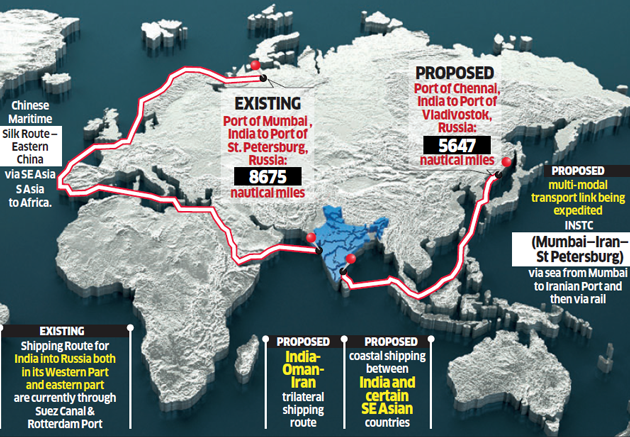
The West Asia crisis has detonated a global energy shock of unprecedented scale, with Iran's effective blockade of the Strait of Hormuz since late February 2026 choking off a critical artery for world trade and energy supplies. This seismic disruption has thrust alternative maritime corridors, particularly the India-Russia Eastern Maritime Corridor (EMC), into an urgent strategic spotlight for countries like India desperate to secure their supply chains and energy imports. With commercial shipping through Hormuz drastically curtailed—at one point nearly zero—and insurance premiums skyrocketing, the race is on to operationalize viable alternatives to circumvent the perilous traditional routes. While the Chennai-Vladivostok Maritime Corridor (CVMC), also known as the EMC, was hailed as operational in late 2024, cutting transit times by over a third compared to the Suez Canal route, a fresh report from June 22, 2026, casts a stark shadow, claiming the project has 'effectively been halted' due to severe technological limitations at Russia Vladivostok port and a notable lack of interest from Russian transport operators. This critical development highlights a major roadblock for India plans to ensure a steady flow of vital resources like Russian crude oil, liquefied natural gas (LNG), and coking coal, even as India Navy deploys warships to guide commercial vessels through the tense Strait of Hormuz to safeguard existing routes. Meanwhile, the International North-South Transport Corridor (INSTC), connecting India, Iran, and Russia via a multimodal network, has seen increased activity and ongoing infrastructure development, offering a more immediate, albeit geographically distinct, alternative. As the world grapples with what the UN Secretary-General called the 'mother of all energy shocks,' India strategic push for trade diversification and energy security intensifies. Despite the operational hiccups with the CVMC, the underlying necessity for such routes remains profound, prompting India to deepen its 'energy diplomacy' and explore other avenues like Russia proposed Trans-Arctic Transport Corridor (TATC) and the Northern Sea Route (NSR). The coming months will reveal if the diplomatic will to overcome infrastructural hurdles can match the geopolitical urgency, or if these ambitious corridors will remain more symbolic than substantive in truly reshaping global trade flows amid persistent West Asia instability.