India Successfully Tests Hydrogen-Powered Train Between Delhi And Jind Ahead Of Commercial Launch
Context mode is active. Hover over any highlighted term to see its definition. Click a nested term to go deeper.
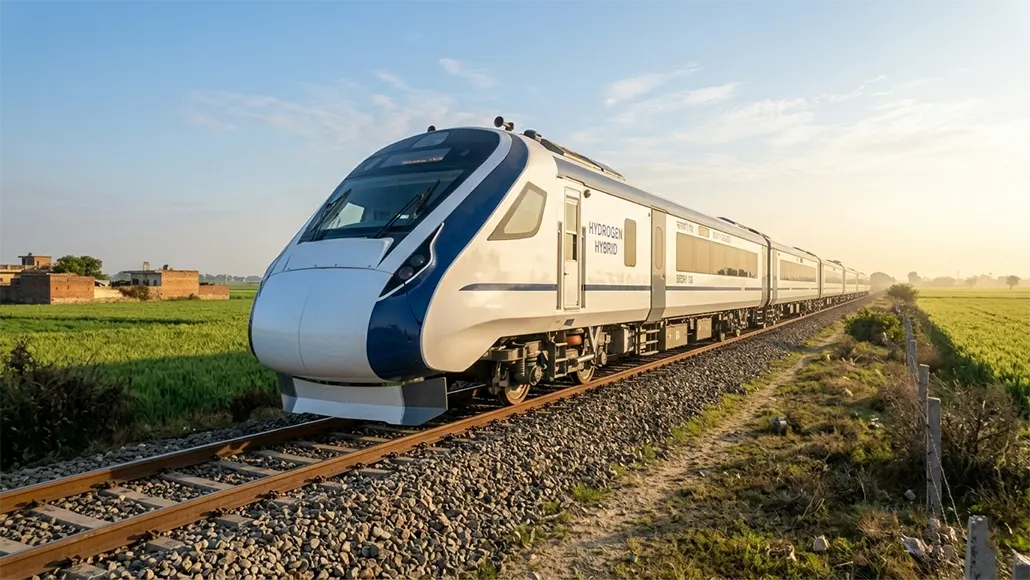
India just took a massive leap into the future of green transport. The nation's first indigenously developed hydrogen-powered train, nicknamed 'Namo Green Rail', successfully zipped through its final 120 kmph speed trials on June 26, 2026, between Jind and Sonipat. This isn't just a technical win; it's a critical step towards Indian Railways hitting its ambitious net-zero emissions target by 2030 and drastically cutting down on diesel dependence. This groundbreaking trial, occurring on a specially developed 89-km track, places India firmly among a select group of nations exploring hydrogen propulsion for railways, like Germany and Japan. The train, powered by a 1,200 kW hydrogen fuel cell system, emits only water vapor, making it a game-changer for reducing carbon and noise pollution across the vast Indian rail network. It's a key part of India's broader 'National Green Hydrogen Mission', which aims to turn the country into a global hub for green hydrogen production and usage, moving away from fossil fuel imports. With the trials complete and two trains already built by the Integral Coach Factory (ICF) in Chennai, commercial operations on the Jind-Sonipat route are expected to begin soon after final regulatory nods. A dedicated green hydrogen production and refuelling facility has been set up at Jind, ensuring smooth operations. While initial costs are higher than diesel, this move signals a strong commitment to long-term sustainable mobility, with plans to extend these eco-friendly trains to heritage routes as well.