India Unleashes First Hydrogen Train, Catalyzing Green Mobility and Self-Reliance
Context mode is active. Hover over any highlighted term to see its definition. Click a nested term to go deeper.
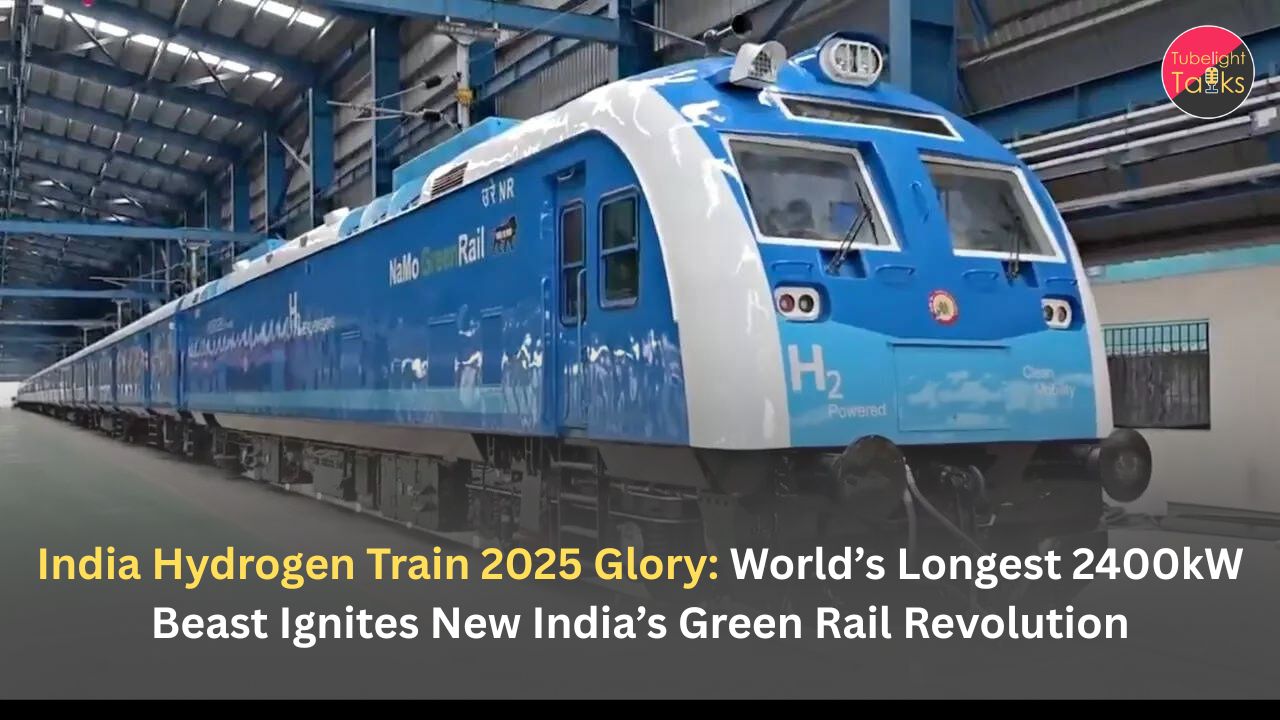
In a monumental stride towards sustainable transportation, Prime Minister Narendra Modi today flagged off India's first hydrogen-powered train from Jind, Haryana, marking a significant leap for the nation's green mobility ambitions. This indigenously developed 'NaMo Green Rail' is set to revolutionize rail travel by producing zero emissions, positioning India among a select group of global pioneers in this cutting-edge technology. Operating on the 89-km Jind-Sonipat route under Northern Railway, this pilot project is a cornerstone of India's ambitious 'National Green Hydrogen Mission' and 'Hydrogen for Heritage' initiative, which aims to decarbonize Indian Railways by 2030 and achieve national net-zero emissions by 2070. The 10-coach train leverages advanced hydrogen fuel cell technology, converting hydrogen and oxygen into electricity with water vapor as its only byproduct, and is supported by India's largest railway hydrogen storage and refuelling facility established in Jind. While the initial investment for hydrogen trains is considerably higher than conventional services, the long-term vision involves replacing diesel locomotives on non-electrified and scenic heritage routes, thereby substantially reducing fossil fuel dependence and promoting domestic technology under the 'Atmanirbhar Bharat' initiative. This indigenously designed and integrated train, capable of carrying approximately 2,600 passengers at speeds up to 75 kmph during its pilot phase, is a testament to India's growing capabilities in advanced railway engineering and sets the stage for a broader national rollout of green rail solutions.