India Unveils ₹1.86 Lakh Crore Green Energy Grid Overhaul with Massive Battery Storage
Context mode is active. Hover over any highlighted term to see its definition. Click a nested term to go deeper.
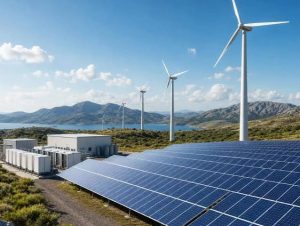
India's Union Cabinet has greenlit the ambitious ₹1.86 lakh crore PM-DHARA scheme, a monumental push to modernize the nation's power grid and integrate a massive 135 Gigawatt (GW) of renewable energy across its states and Union Territories. Announced on September 30, 2026, this initiative is critical for India's clean energy goals, deploying 50 Gigawatt-hour (GWh) of Battery Energy Storage Systems (BESS) to tackle the inherent challenges of solar and wind power. The scheme, formally known as PM-Developing Harmonized and Accelerated Renewable-energy Access, addresses a glaring bottleneck: India lost 300 GWh of renewable energy in the first quarter of 2026 due to inadequate transmission infrastructure, a stark reminder that generation must be matched by robust delivery. By strengthening the Intra-State Transmission System (InSTS) under Green Energy Corridor Phase-III and allocating significant funds for BESS, PM-DHARA aims to stabilize the grid, reduce transmission congestion, and ensure consistent power supply even during non-solar hours. The government's ₹54,082 crore Central Financial Support will also help keep electricity costs down for consumers. Looking ahead, the PM-DHARA scheme is set for completion by FY 2032-33, paving the way for India to meet its aggressive target of 900 GW of non-fossil fuel capacity by 2035. State Transmission Utilities will oversee the rollout, with new 'greenfield' projects utilizing competitive bidding and upgrades handled on a 'cost plus' basis, promising significant activity in the power, manufacturing, and construction sectors. This move is not just about expanding capacity, but building a smarter, more resilient grid essential for India's energy future.