India's BHASHINI Chief: Local Languages Key to Inclusive AI Future
Context mode is active. Hover over any highlighted term to see its definition. Click a nested term to go deeper.
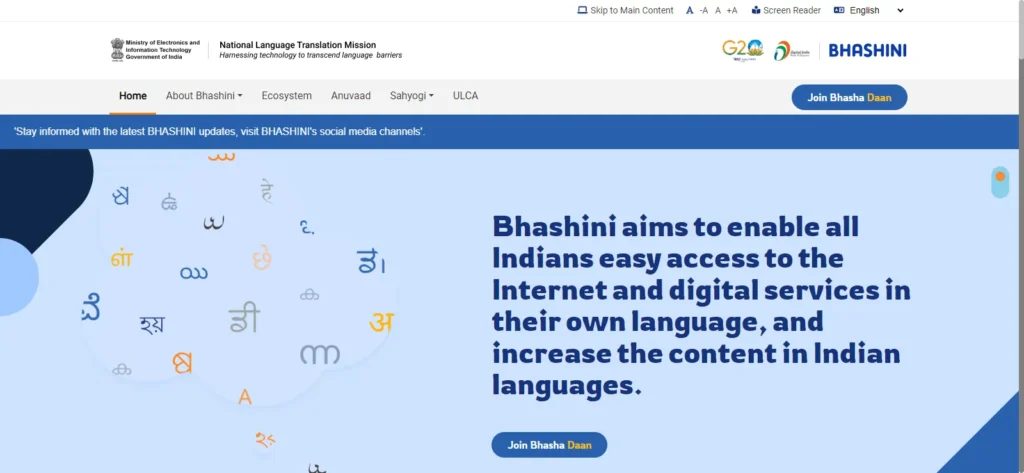
In a major push for citizen-centric governance, India's BHASHINI platform recently showcased its cutting-edge multilingual AI tools at the National Conference on e-Governance (NCeG) 2026, with CEO Amitabh Nag stressing that language is the true foundation for inclusive artificial intelligence. The Digital India BHASHINI Division (DIBD) launched a hackathon to build AI models for Rajasthan's regional languages and demonstrated services like real-time translation and voice-enabled access to government platforms, highlighting India's commitment to making digital services accessible to everyone, regardless of the language they speak. This latest development follows a series of strategic moves by BHASHINI, including recent partnerships with the Government e-Marketplace (GeM) and the Department for Promotion of Industry and Internal Trade (DPIIT) in June 2026, aimed at breaking down language barriers in public procurement and investment ecosystems. Nag's vision, reiterated at the earlier AI Impact Summit 2026, emphasizes solving real-world problems and building AI responsibly, a philosophy that underpins India's National Language Translation Mission (NLTM). This approach is designed to move beyond English as the primary language of digital interaction and empower India's vast linguistic diversity. Looking ahead, the focus will intensify on expanding these Multilingual AI capabilities to more regional dialects and integrating them deeply into daily governance and economic activities. Initiatives like BhashaDaan will continue to gather community contributions to language datasets, ensuring that AI systems are truly representative and accessible across India. The goal is a future where citizens can interact with digital services seamlessly in their native tongues, transforming access to information and opportunities for millions.