India's Critical Minerals Crossroads: A Fierce Race to Build Processing Power
Context mode is active. Hover over any highlighted term to see its definition. Click a nested term to go deeper.
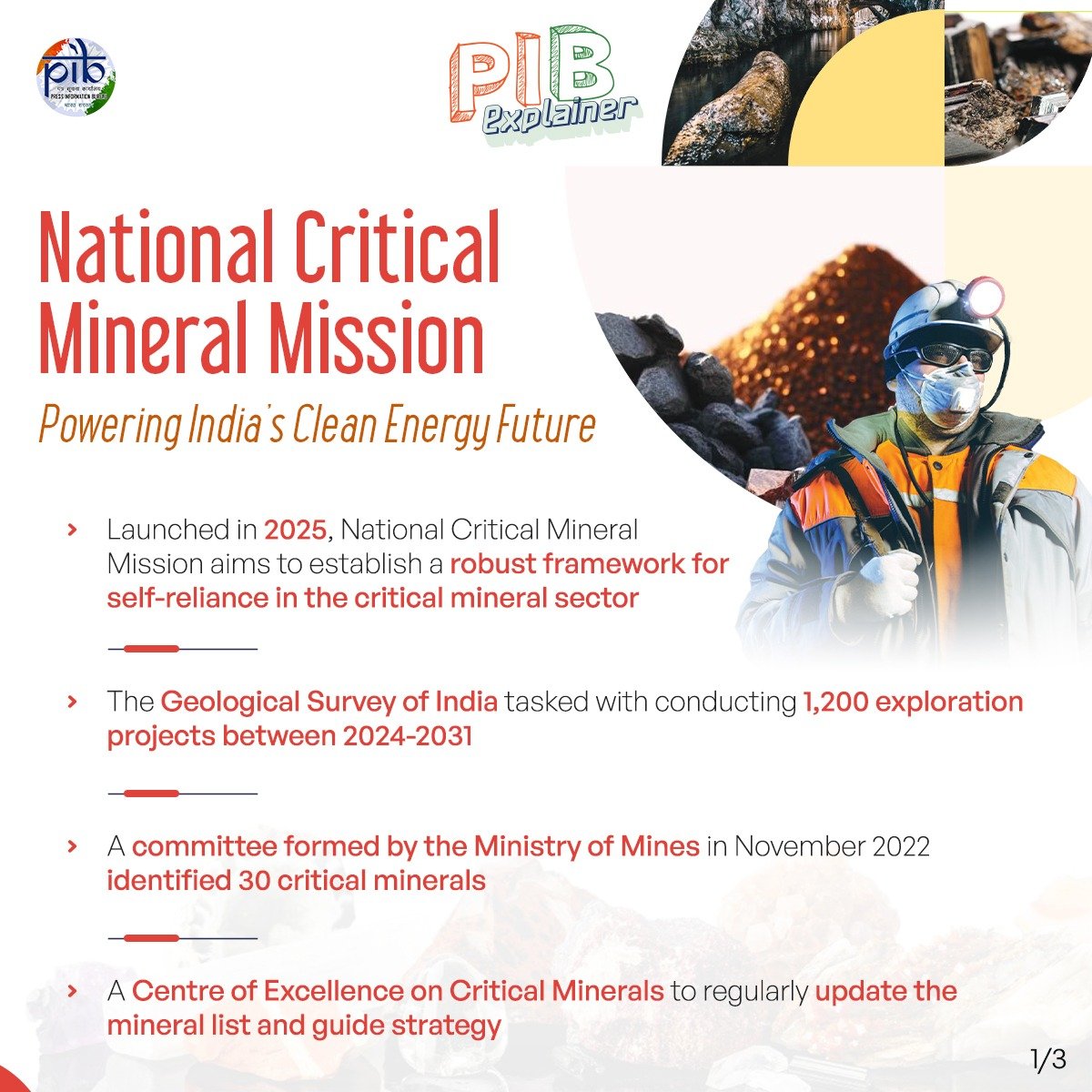
India is aggressively accelerating its push to secure critical minerals, vital for everything from electric vehicles to defense, but faces a significant 'midstream problem'—the crucial lack of domestic processing and refining capacity. Despite recent discoveries of lithium in Jammu & Kashmir and substantial rare earth reserves, the nation remains almost entirely dependent on imports for key processed materials, especially from China, which controls up to 90 percent of global refining for many essential minerals. The government's intensified efforts, including the recent seventh tranche of critical mineral auctions in March 2026 and a landmark India-US Critical Minerals Agreement in May 2026, underscore the urgent national security and economic imperative to overcome this bottleneck. This midstream processing gap creates a geopolitical chokepoint, with China's near-monopoly enabling significant market leverage and supply chain vulnerabilities, as seen with export restrictions in 2023-24 impacting Indian importers. To counter this, India launched the National Critical Minerals Mission (NCMM) in January 2025, pledging INR 34,300 crore (US$4.1 billion) for exploration, processing, and global acquisitions, targeting 50 overseas mining sites by 2030-31. Simultaneously, the May 2026 Quad Critical Minerals Initiative, involving India, the US, Australia, and Japan, committed US$20 billion to de-risk supply chains, signaling a collective effort to build resilient alternatives. The path ahead involves not just finding raw minerals but rapidly developing advanced refining technologies, attracting massive capital investment, and nurturing a skilled workforce to transform raw ore into high-purity, battery-grade materials. The 2026-27 Budget's announcement of Rare Earth Corridors and a November 2025 scheme to build Rare Earth Permanent Magnet manufacturing capacity are crucial steps, but success hinges on translating policy ambition into commercial-scale output. India's strategic mineral diplomacy, including the new India-UK Critical Minerals Global Supply Chain Observatory in June 2026, will be key to diversifying sources and securing technology transfers as the nation races to power its clean energy and industrial future independently.