India's Digital Leap: APAAR ID Powers National Push to Keep Kids in School
Context mode is active. Hover over any highlighted term to see its definition. Click a nested term to go deeper.
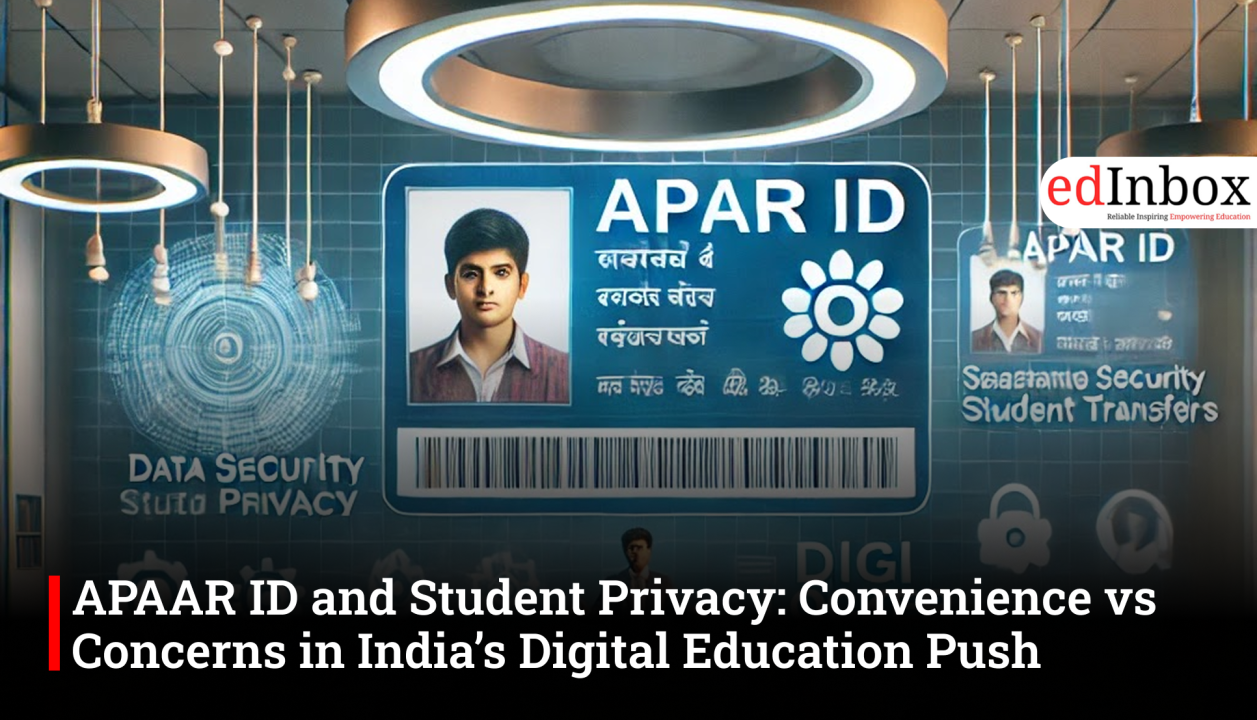
India is aggressively leveraging technology, spearheading its educational reform with the Automated Permanent Academic Account Registry (APAAR) ID, a unique 12-digit digital identification for every student, from pre-primary to university. This initiative, part of the 'One Nation, One Student ID' vision under the National Education Policy (NEP) 2020, aims to digitally track academic progress, streamline student transfers, and significantly reduce school dropout rates across the nation. Over 33.74 crore APAAR ID have already been registered, marking a major stride towards a seamless digital academic journey for millions. The government's ambitious drive to achieve 100% Gross Enrollment Ratio in school education by 2030 is anchored in a multi-pronged strategy. Beyond the digital leap with APAAR, efforts include substantial investment in infrastructure upgrades like smart classrooms, digital libraries, and basic amenities such as functional toilets and safe drinking water, which are critical for student retention, especially for girls. Programs like the Samagra Shiksha Abhiyan and PM SHRI Schools are actively modernizing existing government schools, integrating vocational training and foundational literacy, and providing vital support like free textbooks and meals through schemes like the Pradhan Mantri Poshan Shakti Nirman (PM POSHAN) Yojana. Looking ahead, the APAAR ID is set to become the central hub for India's digital education infrastructure, enabling rapid academic validation and effortless student mobility. While not yet universally mandatory for all applications, its strong recommendation and integration with platforms like the Academic Bank of Credits signal a future where every student's educational journey is digitally recorded and easily accessible, creating a transparent and accountable system crucial for India's aspirations to become a global knowledge superpower.