India's Dinner Table Blues: Food Inflation Forces Spending Rethink, Monsoon Woes Loom for FY27
Context mode is active. Hover over any highlighted term to see its definition. Click a nested term to go deeper.
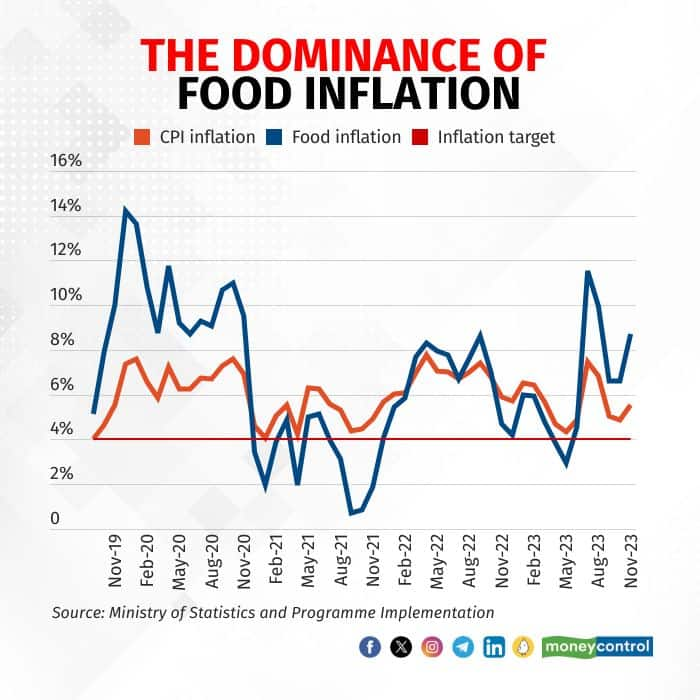
Manish Tiwary, Chairman and Managing Director of Nestle India, revealed that high food inflation in fiscal year 2026 (FY26) dramatically reshaped how Indian households spent their money. Families were forced to rethink everything from the size of product packs they bought to how often they shopped. This consumer struggle comes even as Nestle India reported a strong financial performance, with revenue jumping 22.6% in the fourth quarter of FY26 (Q4FY26). These changes in consumer behaviour point to a deeper stress, which is now projected to worsen significantly in FY27. While volatile input costs and global geopolitical uncertainty kept prices high for companies, a recent report from CareEdge Ratings delivers a stark warning: food inflation could average around 6% in FY27, mainly due to an alarming 41.5% deficit in monsoon rainfall recorded between June 1 and June 29, 2026. This severe rainfall shortage directly threatens India's agricultural output and could push overall Consumer Price Index (CPI) inflation to 5% for the fiscal year. As India heads further into the fiscal year, the Reserve Bank of India (RBI) is keenly observing these weather-related risks, identifying weak monsoons and potential El Niño effects as a bigger threat to inflation than global crude oil prices. In response, companies like Nestle are adapting by focusing on expanding into smaller towns, deepening their understanding of consumers, and using technology to improve sales. However, the immediate future for Indian households will largely depend on how the monsoon unfolds and the effectiveness of government efforts to keep rising food prices in check.