India's Farms Brace for El Niño: Alternative Crops and Monsoon Woes Deepen
Context mode is active. Hover over any highlighted term to see its definition. Click a nested term to go deeper.
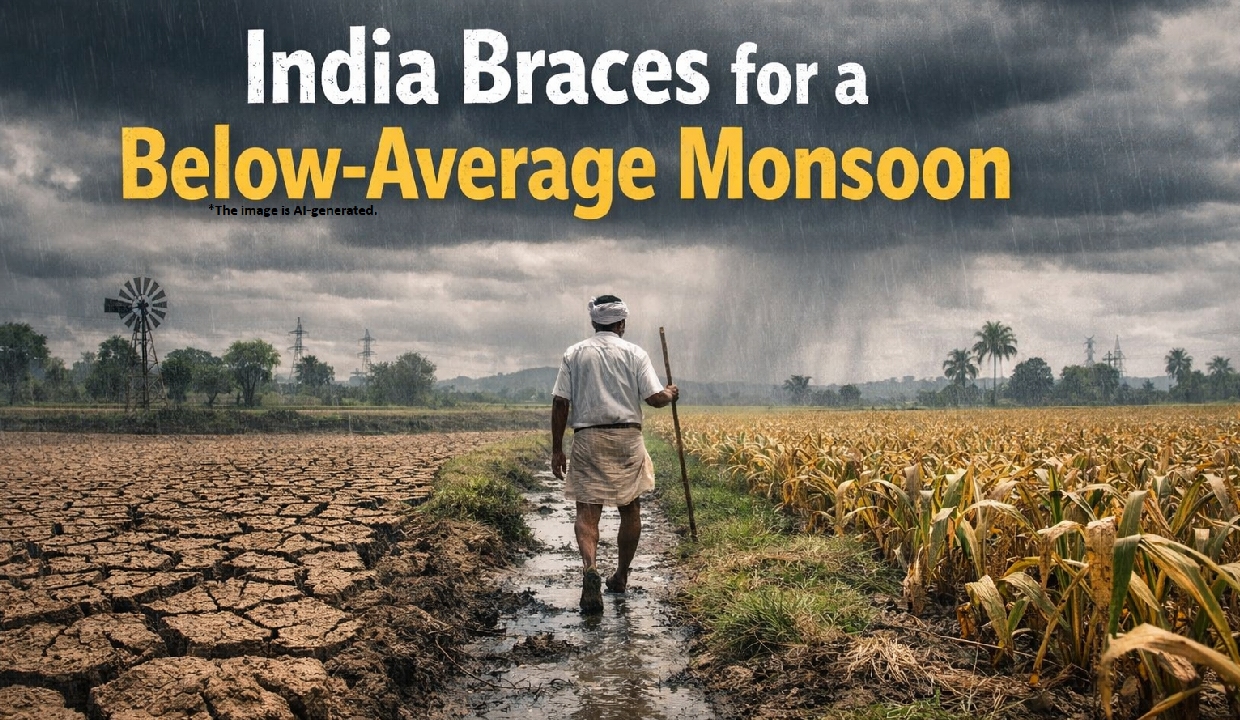
India's agricultural heartland is on high alert as a powerful El Niño threatens to severely disrupt the crucial Southwest Monsoon, pushing the government to roll out urgent alternative cropping plans for millions of farmers. With June already recording a nearly 40% rainfall deficit, and July showing below-normal rains, the India Meteorological Department (IMD) forecasts the 2026 monsoon to be significantly weaker than usual, intensifying worries over crop yields and rural livelihoods. Officials are advising farmers, especially in the 65 of 111 high-priority districts already struggling with inadequate rainfall, to pivot away from water-hungry crops by August. The stakes are incredibly high, as the developing 'Super El Niño' is projected to strengthen into early 2027, potentially creating prolonged dry spells and heat stress across vast agricultural regions. The Prime Minister's Office (PMO) has stepped in, coordinating a national strategy that includes not just new crop recommendations but also bolstering financial safeguards like the Kisan Credit Card scheme and ensuring vital seed and fertilizer buffer stocks. This proactive approach comes as Kharif sowing across the country is already down by 16% compared to last year, indicating widespread challenges even before the monsoon's full impact. Looking ahead, state governments are actively promoting less water-intensive options like maize, soybean, and various pulses, urging a swift transition if monsoon rains do not pick up by August. Weekly agro-weather bulletins and on-ground guidance are being provided to farmers to help them make informed decisions and conserve soil moisture. While adequate reservoir levels in some areas offer a slight buffer, the absence of a positive Indian Ocean Dipole to counteract El Niño's effects means the success of these alternative strategies will be crucial in preventing widespread crop losses and ensuring food security for the nation.