India's Female Workforce Participation Hits One-Year Low, Raising Economic Concerns
Context mode is active. Hover over any highlighted term to see its definition. Click a nested term to go deeper.
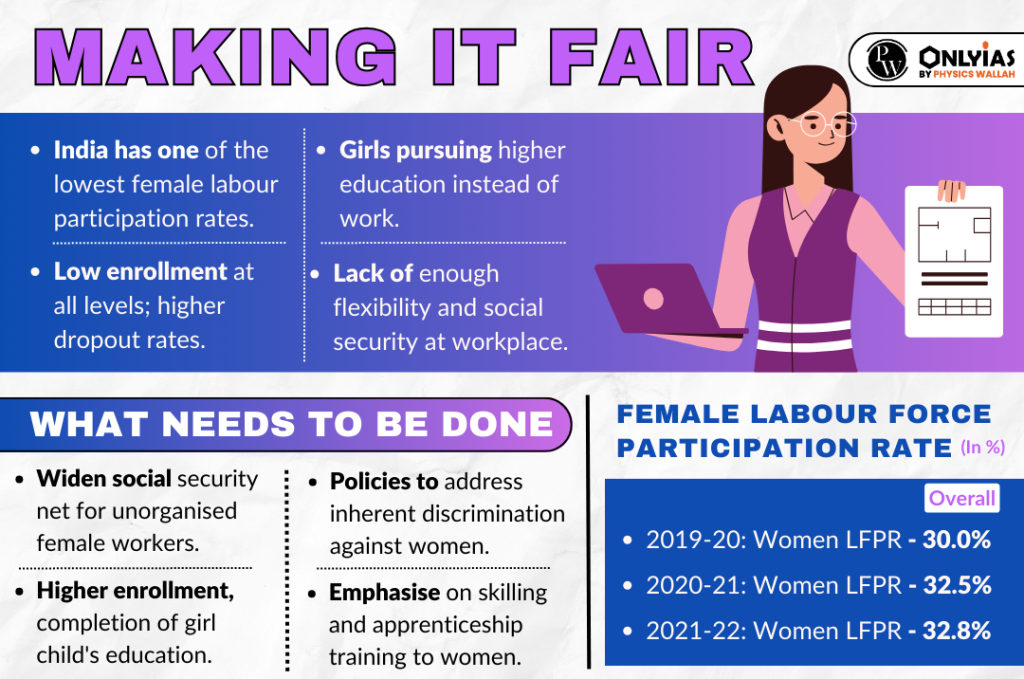
India's female labour force participation rate (LFPR) has taken a significant hit, dropping to a one-year low of 33.2 percent in the April-June 2026 quarter. This sharp decline, reversing steady gains made last year, is the main reason why the country's overall LFPR also slipped to 54.6 percent, marking its lowest point in over a year, according to the latest data from the Ministry of Statistics and Programme Implementation (MOSPI). The fall indicates a concerning pullback of women from the workforce, especially in rural areas, where participation had previously surged due to agricultural and seasonal jobs. This dip in female participation comes despite calls for greater women's economic involvement to boost India's ambition of becoming a developed nation. The rural-urban divide highlights distinct challenges; while rural female LFPR saw a notable drop from 39.4 percent to 37.2 percent, urban participation also eased to 25 percent, its lowest in the series. Experts point to a mix of factors including the cyclical nature of agricultural employment, the persistent burden of unpaid care work, and a lack of suitable job opportunities for women, especially in urban centres, which often pushes them out of the formal job market. Consequently, the overall female unemployment rate has climbed to 5.7 percent, with rural female unemployment also rising. Looking ahead, policymakers will need to closely examine whether this latest decline is a temporary blip due to seasonal factors or if it signals deeper structural issues in India's labour market for women. Government initiatives aimed at skill development, promoting entrepreneurship, and providing social security benefits for women will be critical in encouraging their return and sustained participation in the workforce. The next quarterly data releases from the Periodic Labour Force Survey will be crucial in understanding if these trends persist or if interventions can reverse this worrying trajectory for India's female workforce.