India's First Hydrogen Train Hits Tracks, Propelling Green Rail Revolution
Context mode is active. Hover over any highlighted term to see its definition. Click a nested term to go deeper.
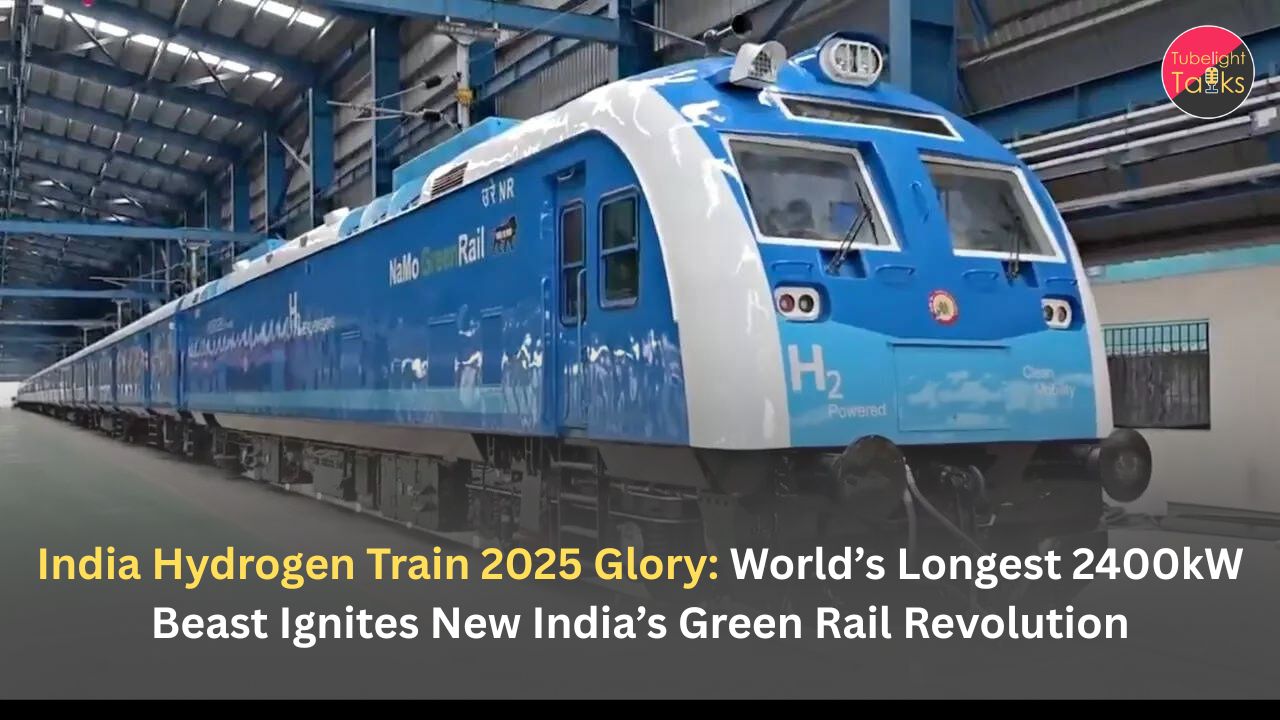
Prime Minister Narendra Modi today flagged off India's first hydrogen-powered train from Jind, Haryana, marking a pivotal moment in the nation's push towards cleaner, sustainable transportation. This indigenously developed 'NaMo Green Rail' will operate on the Jind-Sonipat route, catapulting India into an elite club of nations exploring hydrogen for rail mobility alongside countries like Germany, Japan, and China. The 10-coach train, boasting a 3,200 HP propulsion system, is designed for zero operational emissions, releasing only water vapour as a byproduct. This groundbreaking initiative is a direct alignment with Indian Railways' ambitious target to achieve net-zero carbon emissions by 2030, significantly ahead of India's broader 2070 national goal. The project leverages advanced hydrogen fuel cell technology, converting hydrogen into electricity onboard, thus drastically reducing reliance on fossil fuels and overhead electrification systems. A dedicated hydrogen storage and refuelling facility, secured with a license from the Petroleum and Explosives Safety Organisation (PESO), has been established in Jind to support these operations. The Jind-Sonipat section serves as a crucial pilot route, with plans to expand hydrogen-powered train operations to other corridors, including picturesque heritage routes, demonstrating the scalability of this green mobility solution. Additionally, PM Modi virtually inaugurated the redeveloped Tikamgarh railway station under the Amrit Bharat Station Scheme, with Madhya Pradesh Chief Minister Mohan Yadav participating, showcasing a parallel focus on modernising railway infrastructure across the country. This dual push underscores India's comprehensive strategy for a future-ready, environmentally conscious rail network.