India's First Hydrogen Train Takes Track in Haryana, Unlocking Rs 14,700 Crore Development
Context mode is active. Hover over any highlighted term to see its definition. Click a nested term to go deeper.
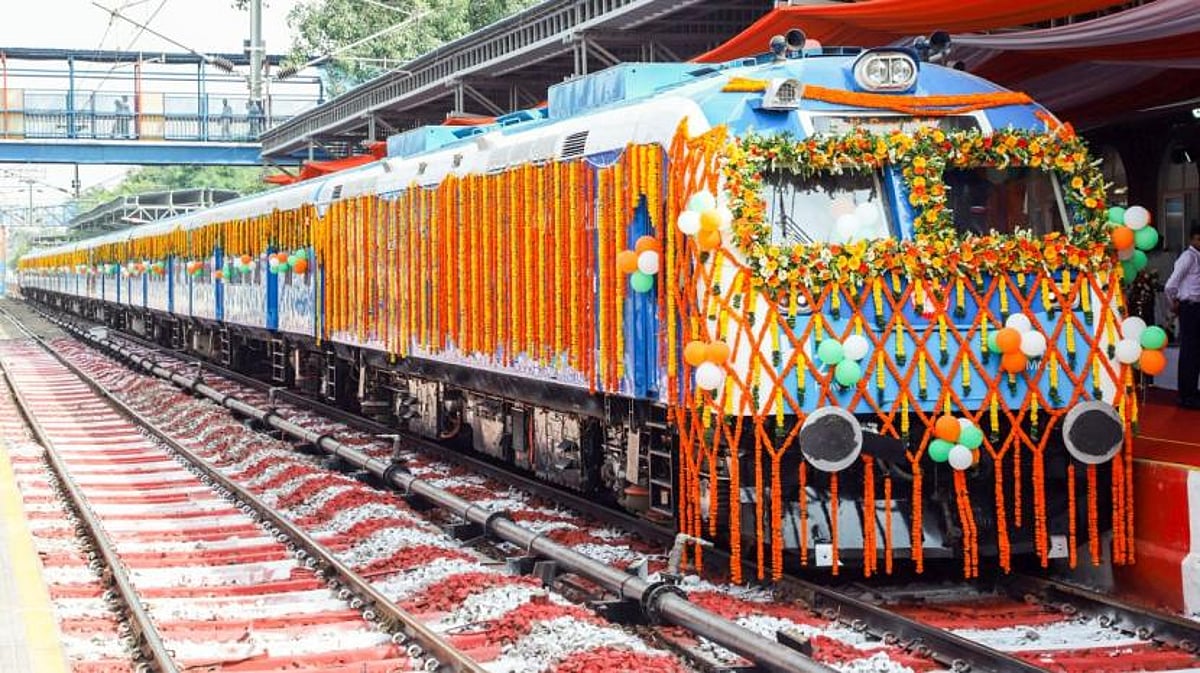
Prime Minister Narendra Modi recently flagged off India's inaugural hydrogen-powered train, the 'NaMo Green Rail,' from Jind in Haryana, marking a monumental stride in the nation's clean energy transition. This domestically built 10-coach train, designed to carry up to 2,600 passengers between Jind and Sonipat, signifies India's entry into an elite group of countries deploying zero-emission rail technology. The historic launch was complemented by the unveiling of development projects worth over Rs 14,700 crore across Haryana, focusing on critical infrastructure and public amenities. This initiative underscores India's accelerated push towards sustainable mobility, aligning with its ambitious net-zero emissions goal by 2070 and the 'Viksit Bharat' vision of a developed nation. The 'NaMo Green Rail,' powered by advanced fuel cell technology that emits only water vapor, not only reduces dependence on traditional fossil fuels like diesel but also champions the 'Make in India' and 'Aatmanirbhar Bharat' campaigns. It's a tangible outcome of the National Green Hydrogen Mission, showcasing India's commitment to indigenous hydrogen technology and setting the stage for future green rail expansion on non-electrified routes. Looking ahead, these extensive projects are set to transform regional connectivity, enhance medical facilities, and spur economic growth in Haryana. The Delhi-Amritsar-Katra Expressway, a key component, will drastically cut travel times, while new medical colleges promise improved healthcare access and increased MBBS seats. The success of this pilot hydrogen train project is crucial, as Indian Railways plans to leverage this experience for deploying hydrogen technology on heritage routes, reinforcing India's leadership in sustainable mobility.