India's Kusha Missile Marks 'Giant Leap' in Air Defence, Boosting Self-Reliance
Context mode is active. Hover over any highlighted term to see its definition. Click a nested term to go deeper.
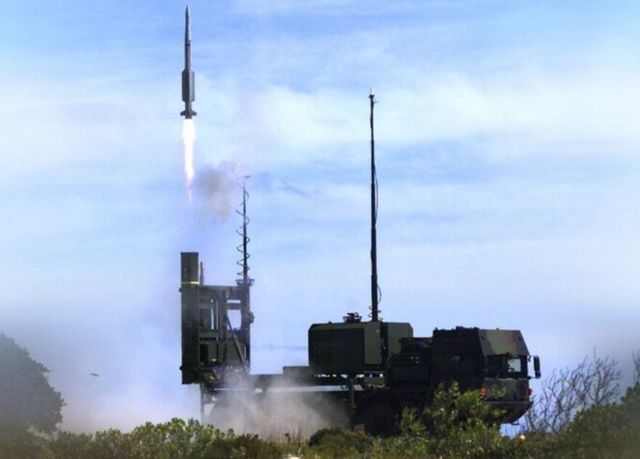
India has taken a monumental step in its defence journey, successfully test-firing the indigenous Kusha Long-Range Surface-to-Air Missile (LRSAM) on July 23, 2026. The test, conducted from APJ Abdul Kalam Island off the Odisha coast, saw the missile successfully intercepting a high-speed, high-altitude electronic target, validating years of dedicated research by the Defence Research and Development Organisation (DRDO) and its partners. This breakthrough is being hailed by Defence Minister Rajnath Singh as a 'giant leap' for India's air defence and a major stride towards reducing reliance on imported military technology. Codenamed 'Project Kusha,' this advanced missile system aims to provide a multi-layered air defence shield, capable of neutralizing a wide array of aerial threats, including fighter jets, cruise missiles, unmanned aerial vehicles (UAVs), stealth platforms, and even certain ballistic missile threats, with ranges up to 400 km. This indigenous development is crucial as India simultaneously scales up its imported long-range systems like Russia's S-400 Triumf, demonstrating a dual approach to bolster national security amid rising regional complexities. The project, approved in 2022 with a budget of approximately ₹21,700 crore, signals India's commitment to its 'Atmanirbhar Bharat' (self-reliant India) initiative by developing critical defence capabilities domestically. The successful test paves the way for the Kusha system's phased induction into the Indian Armed Forces, expected between 2028 and 2030, eventually becoming a cornerstone of the ambitious 'Mission Sudarshan Chakra' – India's vision for a comprehensive national air and missile defence shield by 2035. With key public and private sector players like Bharat Electronics Limited (BEL) and Bharat Dynamics Limited (BDL) ramping up production, this moment not only strengthens India's strategic autonomy but also sends a clear signal to adversaries like China and Pakistan, forcing them to rethink their air power strategies.