India's Leather Exports Eye $14 Billion by 2030, Fueled by Fresh Global Trade Deals
Context mode is active. Hover over any highlighted term to see its definition. Click a nested term to go deeper.
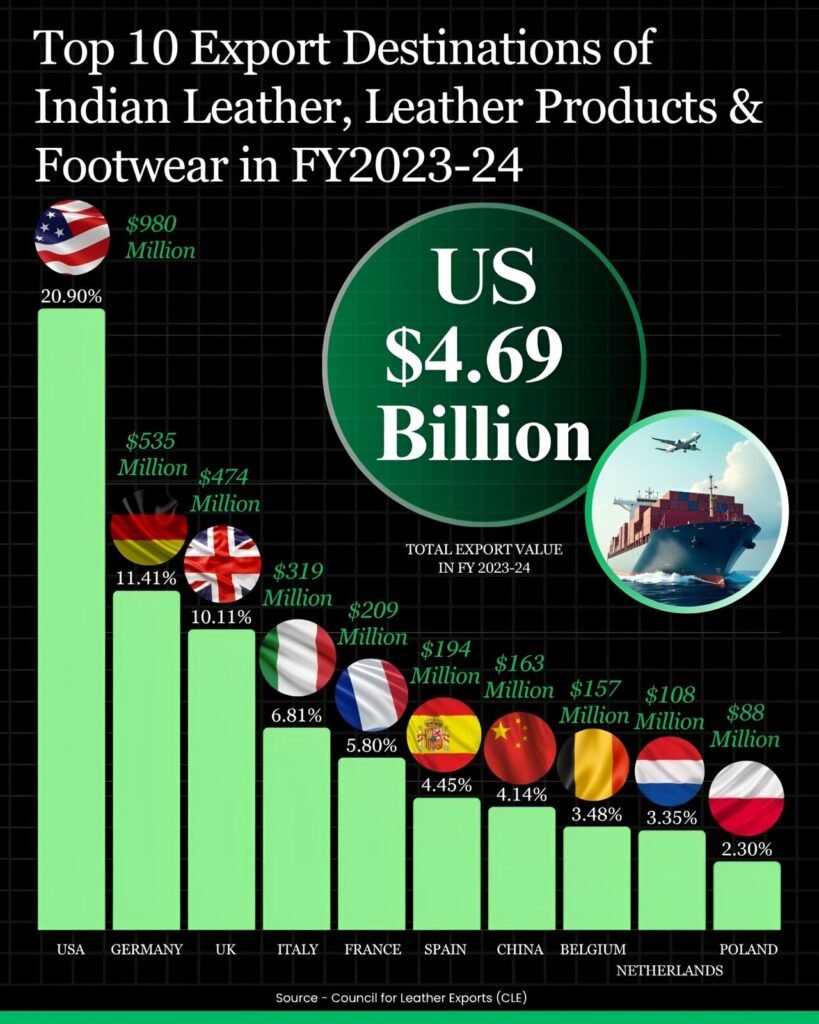
India's leather and footwear industry is setting an ambitious course to nearly triple its exports to USD 14 billion by 2030, a jump from the current USD 4.75 billion, primarily propelled by a wave of recently finalized and impending Free Trade Agreements (FTAs) with key global markets. This aggressive growth strategy, championed by the Council for Leather Exports (CLE) and backed by Union Commerce Minister Piyush Goyal, hinges on securing preferential access in developed economies and diversifying beyond traditional buyers. The goal is part of a larger vision for the sector to achieve a total turnover of USD 50 billion within the same timeframe, creating millions of new jobs across the country. The momentum is building rapidly with critical trade pacts moving from negotiation to implementation. The landmark India-European Union FTA, promising zero percent import duty on leather and footwear, was sealed in January 2026, with legal reviews nearing completion and high-level meetings scheduled for mid-July. Similarly, the India-UK Free Trade Agreement is set to formally come into force on July 15, 2026, while a comprehensive FTA with New Zealand was signed in April, granting 100% duty-free access. These agreements follow successful pacts with the UAE, Oman, Mauritius, Australia, and the EFTA countries, significantly boosting India's competitive edge against rival exporting nations. However, a crucial missing piece remains a comprehensive trade pact with the United States, India's largest export destination, which CLE Chairman Ramesh Kumar Juneja describes as 'eagerly awaited' to secure lasting preferential access. As India currently sends over 77% of its leather exports to just 15 countries, the push for market diversification, along with ongoing negotiations for FTAs with nations like Canada, Mexico, and Brazil, will be critical. The industry is now focused on improving quality, design, and sustainability to maximize the benefits from these new trade avenues and achieve its ambitious employment and export target.