India's New Criminal Laws: Technology, Timelines, and Trust Drive Justice Reform
Context mode is active. Hover over any highlighted term to see its definition. Click a nested term to go deeper.
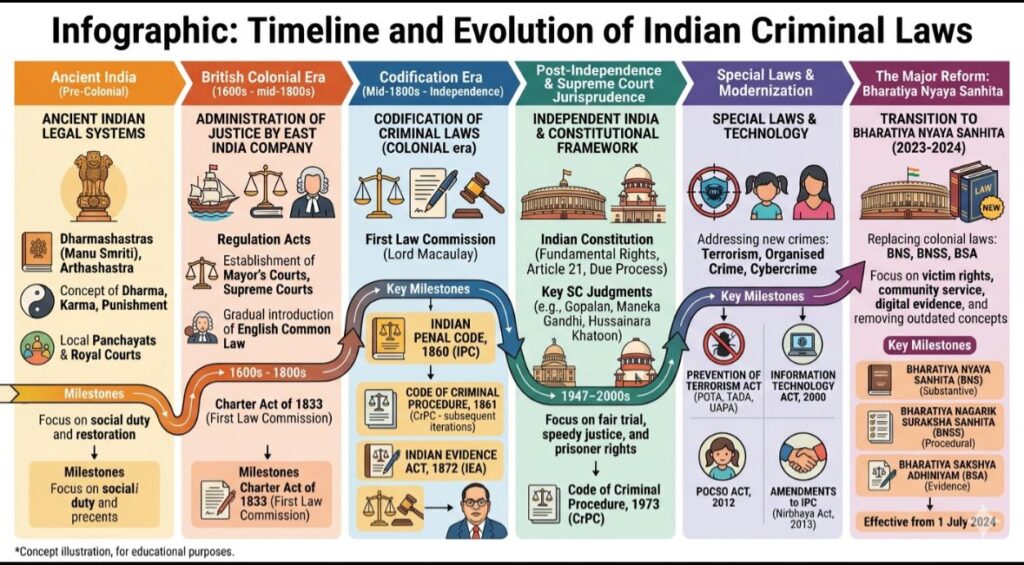
Union Home Minister Amit Shah recently declared in Puducherry that India's three new criminal laws, which replaced colonial-era statutes, are built on the foundational pillars of technology, timeline, and trust. Speaking at a ceremony where he awarded the President's Colour to the Puducherry Police, Shah emphasized that these reforms aim to deliver faster and more effective justice to citizens. These transformative laws—the Bharatiya Nyaya Sanhita (BNS), Bharatiya Nagarik Suraksha Sanhita (BNSS), and Bharatiya Sakshya Adhiniyam (BSA)—came into effect on July 1, 2024, replacing the age-old Indian Penal Code, Code of Criminal Procedure, and Indian Evidence Act respectively. Over the past two years, their implementation has focused on modernizing investigations, strengthening victim rights, and integrating technology like e-FIR, e-summons, e-warrants, and sophisticated handling of electronic evidence, including unique hash value for authenticity. The government's ambitious vision for a technology-driven criminal justice system, however, faces practical hurdles such as upgrading digital infrastructure in remote areas and providing extensive training for police and legal professionals. As these laws continue to evolve, their success hinges on seamless integration and addressing these challenges to ensure that the promise of time-bound, transparent, and trustworthy justice reaches every corner of the nation.