India's Plastic Packaging Rules Just Got Tougher: New EPR Portal, Higher Recycling Targets
Context mode is active. Hover over any highlighted term to see its definition. Click a nested term to go deeper.
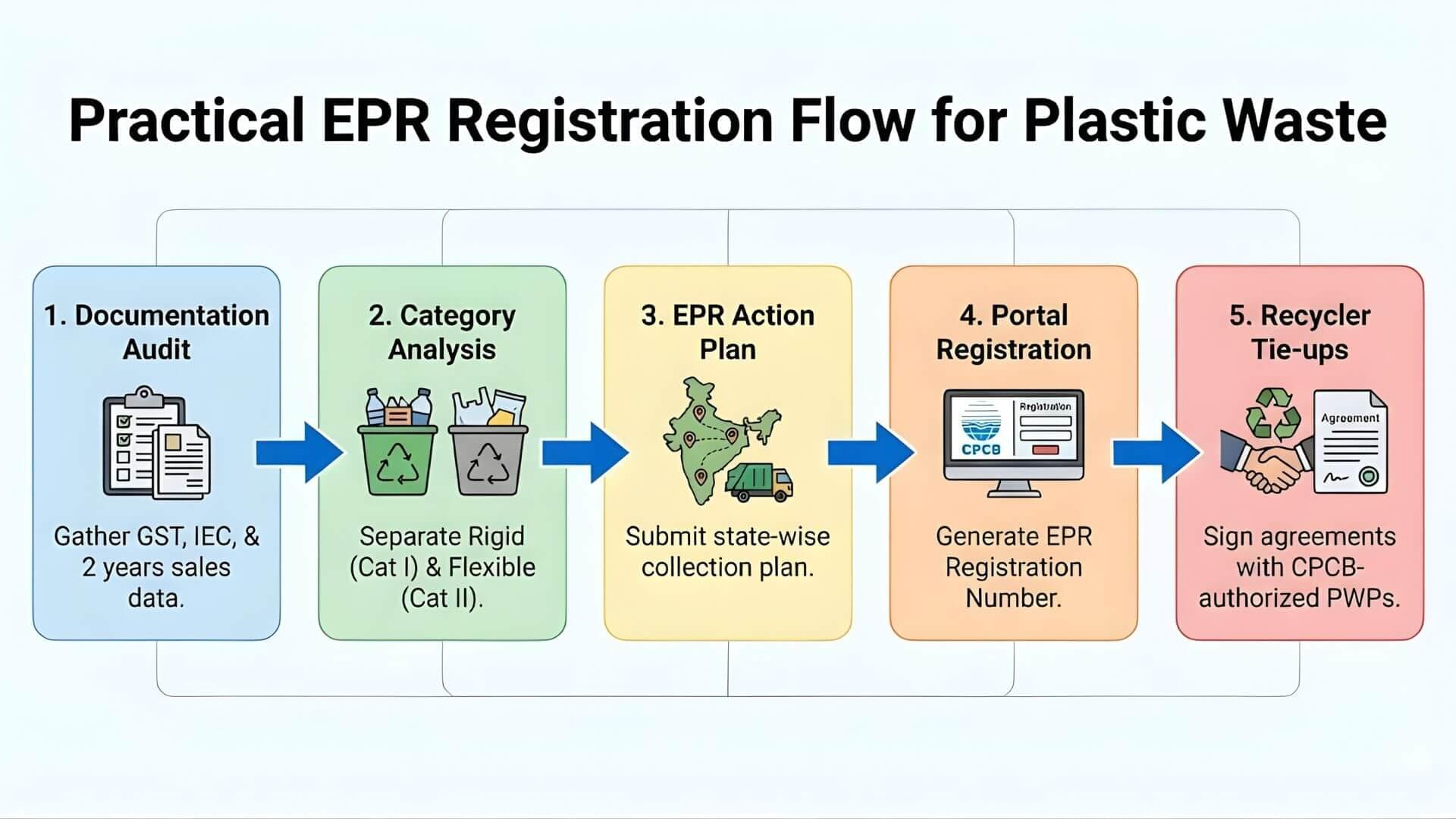
India has significantly tightened its Extended Producer Responsibility (EPR) framework for plastic waste, introducing mandatory recycled content targets and higher reuse goals under the recently updated Plastic Waste Management (Amendment) Rules, 2026. This means businesses dealing with plastic packaging in the country now face stricter compliance requirements and must adapt quickly to avoid penalties. A major development is the launch of a new, centralized Common EPR Portal in July 2026, replacing the old system and requiring all registered entities to verify their data. The amendments, notified by the Ministry of Environment, Forest and Climate Change earlier in 2026, are a strong push towards a circular economy for plastics. Key changes include phased increases in recycled plastic content for various packaging types; for example, rigid packaging (Category I) must now contain 40% recycled material in 2026-27, rising to 60% by 2028-29. Specific reuse targets for rigid plastic packaging have also been mandated, along with updated definitions for 'End-of-Life' disposal methods like waste-to-energy. Non-compliance carries substantial risks, including environmental compensation fines and potential suspension of CPCB registration. Producers, Importers, and Brand Owners (PIBOs) must urgently ensure their compliance strategies align with these evolving rules, particularly by verifying their information on the new Common EPR Portal. The annual return filing deadline for EPR was June 30, 2026, making ongoing reporting crucial. The government's move also formalizes a system for tradable plastic credits to help businesses meet their obligations and extends similar accountability principles to paper packaging from April 1, 2026, signalling a broader shift in waste management across industries.