Italy Rebukes NATO's Rutte over Remarks on US Use of Bases in Iran war
Context mode is active. Hover over any highlighted term to see its definition. Click a nested term to go deeper.
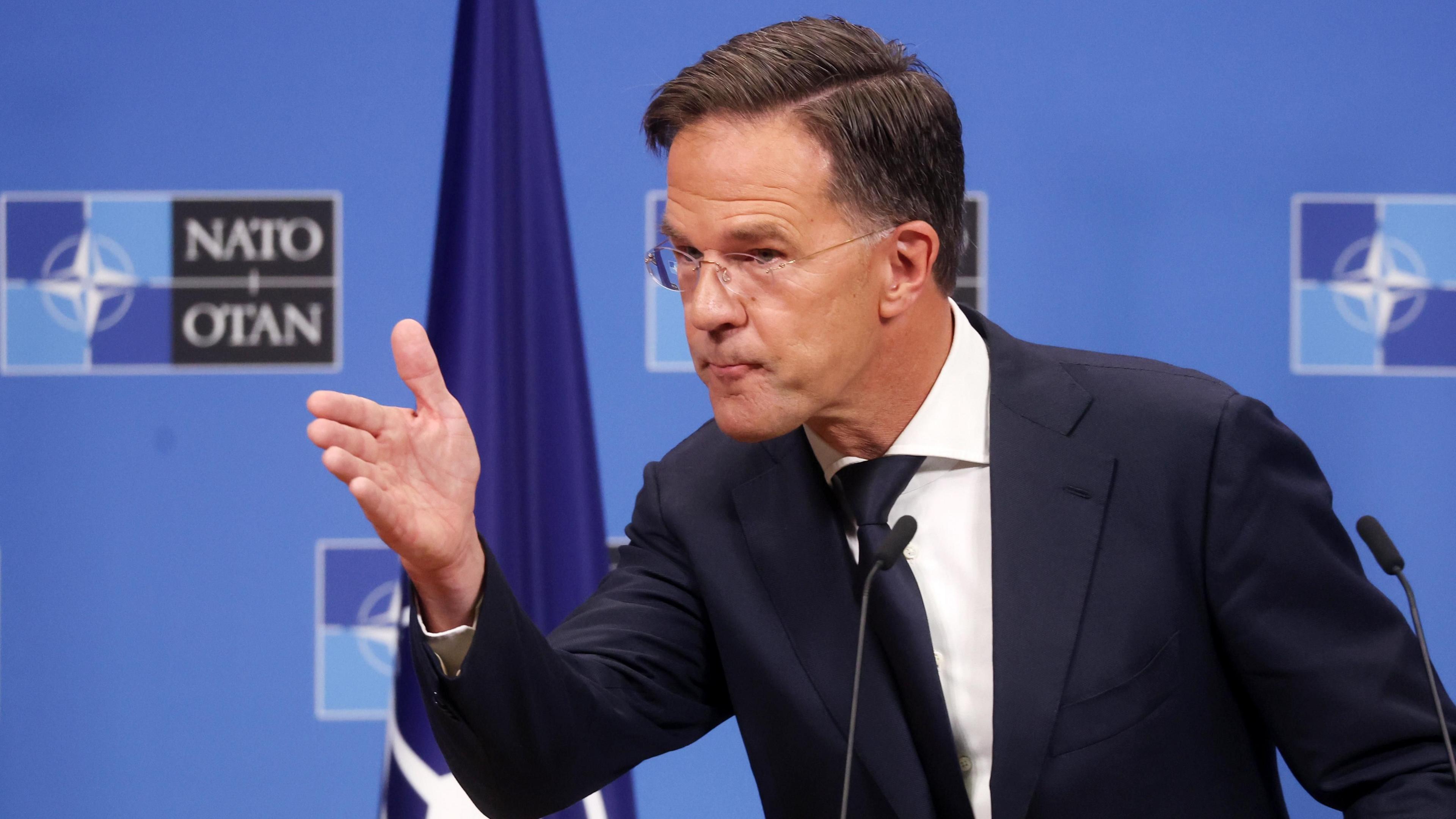
Italy has slammed NATO Secretary General Mark Rutte, pushing back forcefully against his recent assertion that "hundreds" of U.S. aircraft launched from Italian bases to support "Operation Epic Fury" – Washington's military campaign alongside Israel against Iran. Rome's Defense Ministry clarified that it explicitly authorized only 'technical and logistical, non-kinetic activities,' not direct combat operations, exposing a significant diplomatic rift within the transatlantic alliance. This public disagreement highlights the delicate balance NATO members must strike between alliance commitments and national sovereignty, especially when facing politically sensitive military interventions. The spat erupted after Rutte told Fox News that "500 US planes" had taken off from Italian soil for the Iran war, a conflict which officially began on February 28, 2026, with US-Israeli airstrikes against Iranian targets. This comes amid existing tensions between Italian Prime Minister Giorgia Meloni government and US President Donald Trump, who has publicly criticized Italy for its reluctance to fully support the US military campaign in the Middle East. Italy, which hosts some 120 US military facilities, including crucial hubs like Sigonella and Aviano, has consistently maintained that any use of its territory for offensive actions requires specific parliamentary approval and adheres strictly to its constitutional principles, even denying certain US flights in March 2026. A NATO official later sought to de-escalate, clarifying Rutte's comments referred solely to logistical and technical support. This public rebuke forces a renewed examination of the operational parameters governing allied forces stationed abroad and the transparency expected from NATO leadership, particularly as Mark Rutte, who assumed his role in October 2024, prepares for upcoming high-stakes meetings with President Trump. With opposition leaders in Italy demanding fresh explanations, Meloni's government faces pressure to reaffirm its stance, potentially impacting future bilateral defense agreements and further testing the cohesion of the alliance amidst ongoing regional instability in the Middle East. The incident underscores the complexities of collective security, where interpretations of 'support' versus 'combat' can ignite international friction.