Japan finance minister held emergency call with Bessent as yen nears 40-year low
Context mode is active. Hover over any highlighted term to see its definition. Click a nested term to go deeper.
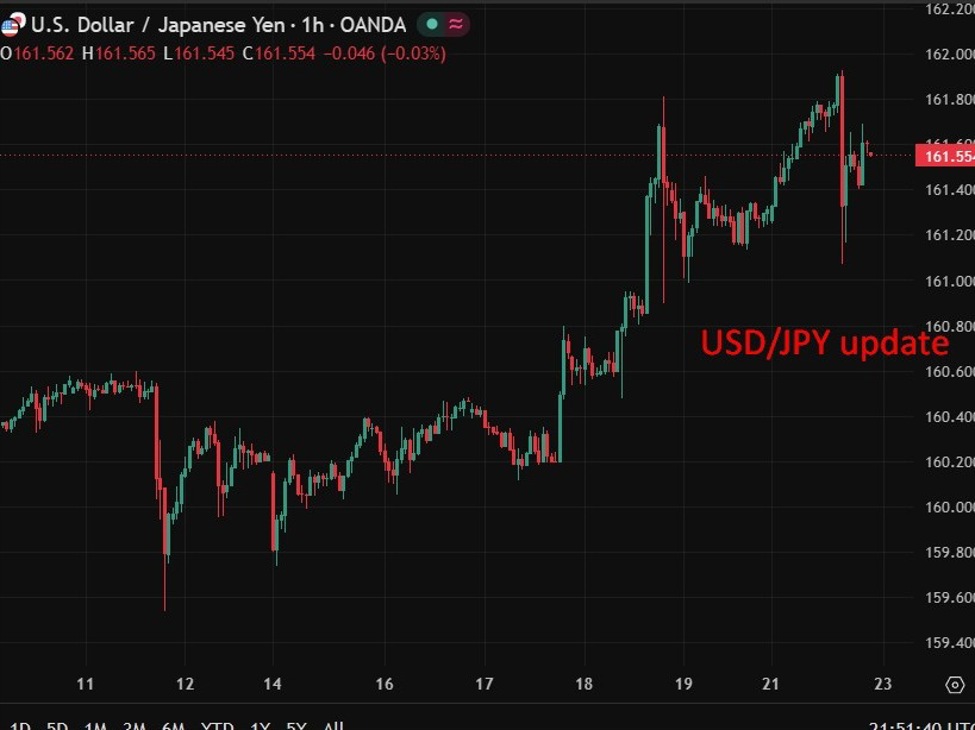
Japan's Finance Minister Satsuki Katayama held an urgent online call with US Treasury Secretary Scott Bessent late Monday, as the Japanese Yen teetered perilously close to a 40-year low against the US Dollar, sparking intense speculation of impending currency intervention. The high-level talks, confirmed by Katayama on Tuesday, underscore Tokyo's deepening concerns as the yen hovered around 161.6 against the dollar, just shy of the critical 161.96 level not seen since December 1986. The yen's persistent weakness is primarily fueled by a stark interest rate differential, with the Bank of Japan maintaining ultra-low rates (despite a recent hike to 1%) while the US Federal Reserve signals further tightening. This divergence incentivizes 'carry trades' that involve borrowing in yen to invest in higher-yielding dollar assets, putting constant downward pressure on Japan's currency. Further compounding the issue are elevated global commodity prices, exacerbated by the ongoing US-Iran conflict, which amplify import costs for resource-scarce Japan, hurting households and businesses. Tokyo previously spent a record $72-74 billion on intervention between late April and early May, an effort that only provided temporary relief. With Katayama confirming a 'firm mutual agreement' with the US to take 'decisive action' if needed, market watchers are now keenly focused on whether the USD/JPY pair breaches the 161.96 threshold. A decisive move past this point would almost certainly trigger another round of Japanese currency intervention, with or without explicit US endorsement, although the ministerial-level talks suggest Tokyo is seeking US acquiescence. However, experts remain divided on how effective such interventions can be in the long run without fundamental shifts in interest rate policies, suggesting continued volatility for the yen and broader commodity markets.