JWST Studies a Dark and Airless Super-Earth
Context mode is active. Hover over any highlighted term to see its definition. Click a nested term to go deeper.
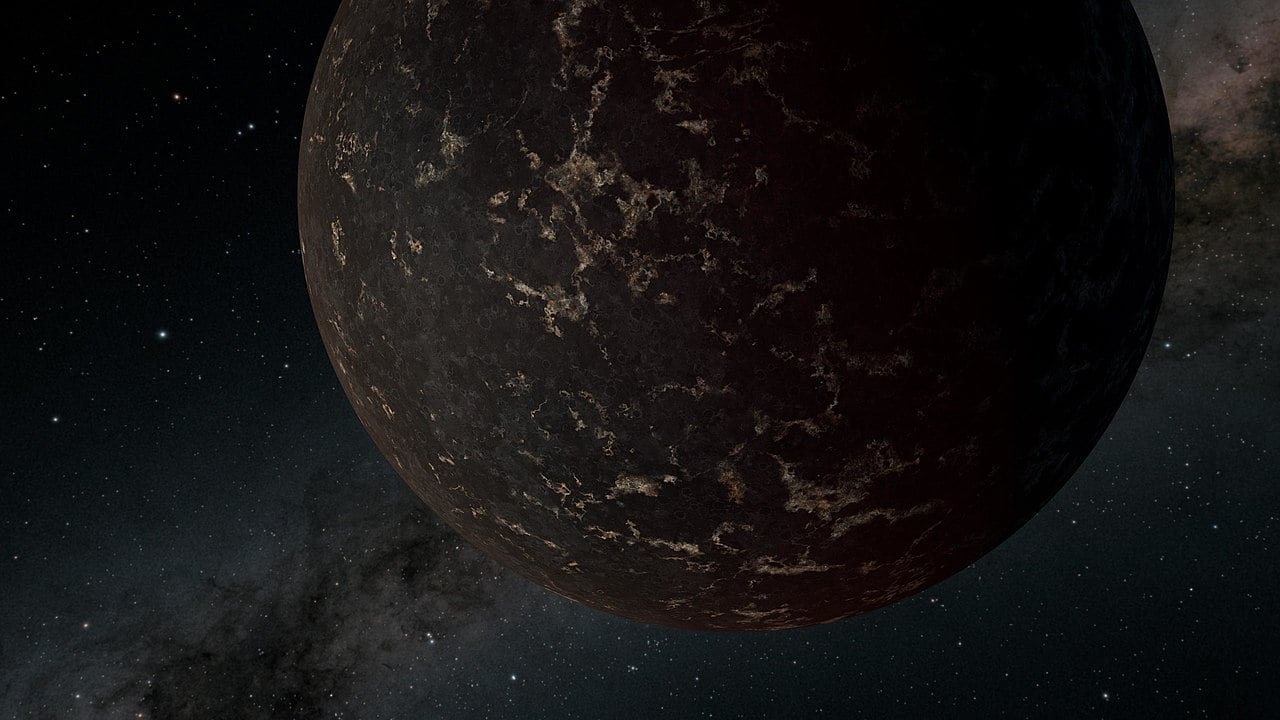
The James Webb Space Telescope (JWST) has delivered a stark message from 48 light-years away, confirming LHS 3844 b, a tidally locked "super-Earth," is a barren, airless world. Recent refined analyses of JWST mid-infrared observations have solidified previous indications, revealing a scorching dayside and frigid nightside with extreme temperature differences exceeding 1000°C, a definitive signature of a planet devoid of any heat-distributing atmosphere. This definitive finding offers critical counter-evidence to widespread assumptions about rocky exoplanet habitability, even those found orbiting relatively quiet M-dwarf star. The absence of an atmosphere on LHS 3844 b, initially detected by the Transiting Exoplanet Survey Satellite (TESS) in 2018, presents a significant puzzle for planetary formation models, especially considering its larger mass than Earth. Such stark atmospheric escape or primordial absence challenges our understanding of how rocky planets retain their gaseous envelopes, particularly those bombarded by stellar wind from their close-orbiting M-dwarf host. This case study serves as a crucial "negative control" as astronomers push JWST limits to perform atmospheric characterization on potentially habitable worlds. Looking ahead, the insights gleaned from LHS 3844 b are invaluable, informing target selection and interpretative frameworks for upcoming searches for biosignatures on exoplanet with more promising atmospheric profiles. The continued fine-tuning of spectroscopic techniques, driven by these "failed" atmospheres, will be pivotal for distinguishing genuine signs of life from geological processes. As the scientific community anticipates next-generation telescopes, the lessons from this desolate super-Earth will profoundly shape the quest for Earth's truly habitable cousins.