Keralam’s Priyadarshini scheme to offer free bus travel to thousands of women
Context mode is active. Hover over any highlighted term to see its definition. Click a nested term to go deeper.
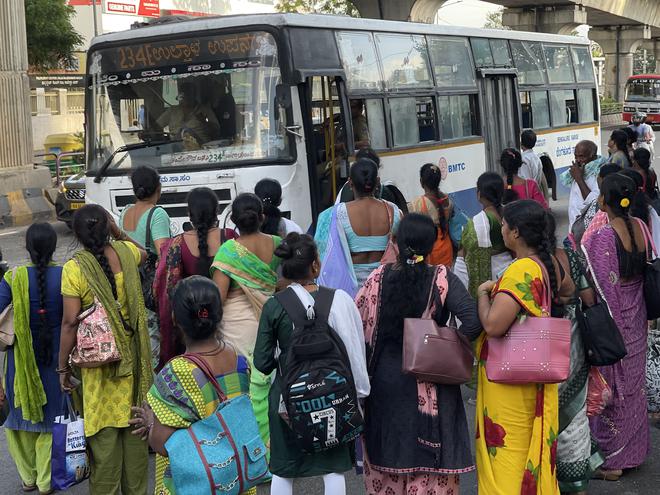
Keralam today launched its landmark 'Priyadarshini scheme', ushering in free bus travel for thousands of women and transgender persons across the state's ordinary public transport network. Inaugurated by Chief Minister V.D. Satheesan, the initiative represents a significant push for enhanced mobility and social inclusion, immediately impacting an estimated 3,125 Kerala State Road Transport Corporation (KSRTC) ordinary services. The scheme, which requires no registration or income criteria, aims to unlock greater economic participation and reduce daily travel expenditure for beneficiaries. This universal benefit, a cornerstone of the ruling United Democratic Front (UDF) 'Indira Guarantees' election pledges, comes with a substantial annual cost of approximately ₹800 crore, fully borne by the state government. While widely lauded for its potential to boost women's disposable income by 15-25% and stimulate the local economy, the launch was not without political friction; opposition parties boycotted the event, citing a dilution of the initial promise to include all bus categories. Kerala now joins at least eight other Indian states, including Karnataka and Tamil Nadu, that have implemented similar gender-focused free public transport schemes, with studies consistently showing positive impacts on female labor force participation and safety. Looking ahead, the Priyadarshini scheme initial phase covers seven categories of KSRTC ordinary buses, with plans for a performance review after 100 days to consider expanding the benefit to faster and superfast services. Transport authorities have mandated zero-fare tickets issued via Electronic Ticket Machine for auditing, and eligible buses will carry clear 'Priyadarshini Scheme' stickers. This rollout is expected to reshape daily commutes, fostering not just improved gender equality but also potentially influencing urban planning and future public welfare initiatives in the region.