Mexico's Sheinbaum Pushes 16-Year USMCA Extension Amid US Push for Changes
Context mode is active. Hover over any highlighted term to see its definition. Click a nested term to go deeper.
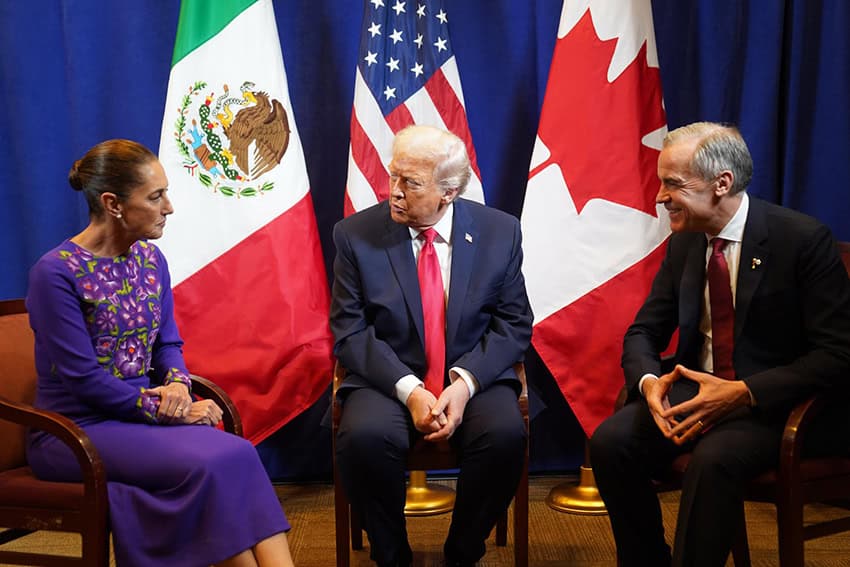
Mexican President Claudia Sheinbaum has formally called for a full 16-year extension of the United States-Mexico-Canada Agreement (USMCA) just hours before the pact's critical six-year review. This move from Mexico signals a desire for stability in North American trade, clashing with expectations that the U.S. administration will decline an immediate extension, instead opting to trigger a phase of annual reviews and push for significant changes. Today, July 1, 2026, marks the first mandatory joint review of the USMCA, six years after it replaced NAFTA. Under the agreement's unique 'sunset clause,' all three nations—the U.S., Mexico, and Canada—must confirm their desire to continue the pact. While Mexico and Canada aim for a straightforward extension to maintain economic certainty, the Trump administration is reportedly looking for concessions on key areas like automotive rules of origin, labor enforcement, and measures to block Chinese goods from benefiting from the agreement, injecting considerable uncertainty into North American supply chains. With the U.S. expected to bypass a clean 16-year extension, the trade agreement is now likely to enter a period of annual reviews that could last until 2036, rather than being automatically renewed until 2042. Businesses and policymakers across the continent will be closely watching upcoming negotiation rounds, including those scheduled between the U.S. and Mexico later this month, as the future of an estimated $2 trillion in regional trade, investment, and potential tariff impacts remains deeply uncertain.