Modi Courts New Zealand Investors, Eyeing $20 Billion Infusion for India's Growth
Context mode is active. Hover over any highlighted term to see its definition. Click a nested term to go deeper.
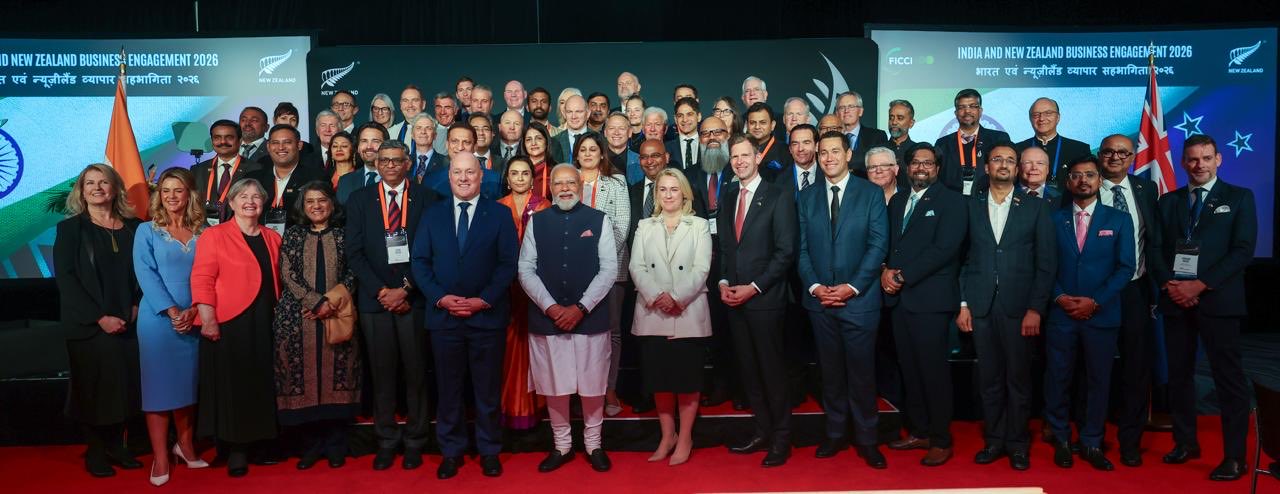
Prime Minister Narendra Modi recently extended a significant invitation to New Zealand businesses, urging them to actively participate in India's rapid economic expansion. During a historic visit to Auckland on July 11, 2026, where relations were elevated to a Strategic Partnership with New Zealand Prime Minister Christopher Luxon, Modi highlighted India's robust growth and ongoing reforms, seeking greater investment across critical sectors like infrastructure, clean energy, logistics, and digital technologies. This outreach is strategically timed, following the India-New Zealand Free Trade Agreement signed earlier this year, aiming to double bilateral trade to NZD 7 billion by 2030 and secure a pledged USD 20 billion investment from New Zealand over the next 15 years. India's appeal as a global investment hub is currently at an all-time high. The International Monetary Fund (IMF) projects the nation will remain the fastest-growing major economy globally, with growth forecasts around 6.4-7.0% for 2026-27, driven by strong private consumption and service sector activity amidst global uncertainties. This strong outlook is bolstered by recent policy maneuvers, including reforms to liberalize Foreign Direct Investment rules, increase investment limits for overseas individuals, and offer tax incentives for Foreign Portfolio Investors in government securities. The government's Production-Linked Incentive (PLI) schemes across 14 sectors, along with massive infrastructure and clean energy investments, are further sweetening the deal for international partners. Looking ahead, the implementation of the India-New Zealand Free Trade Agreement is expected to unlock substantial opportunities, with India granting duty-free access to all 8,284 of its export product lines to New Zealand. New Zealand businesses, already showing increased optimism and identifying India as a top growth priority, are poised to deepen engagement in areas like agri-tech, food processing, and emerging technologies. The success of this intensified partnership will hinge on the swift execution of these agreements and continued alignment on strategic initiatives, signaling a pivotal moment for both nations in the Indo-Pacific economic landscape.