Modi Invites Australian Investment for India's Growth Story, Pension Fund Pledges Millions
Context mode is active. Hover over any highlighted term to see its definition. Click a nested term to go deeper.
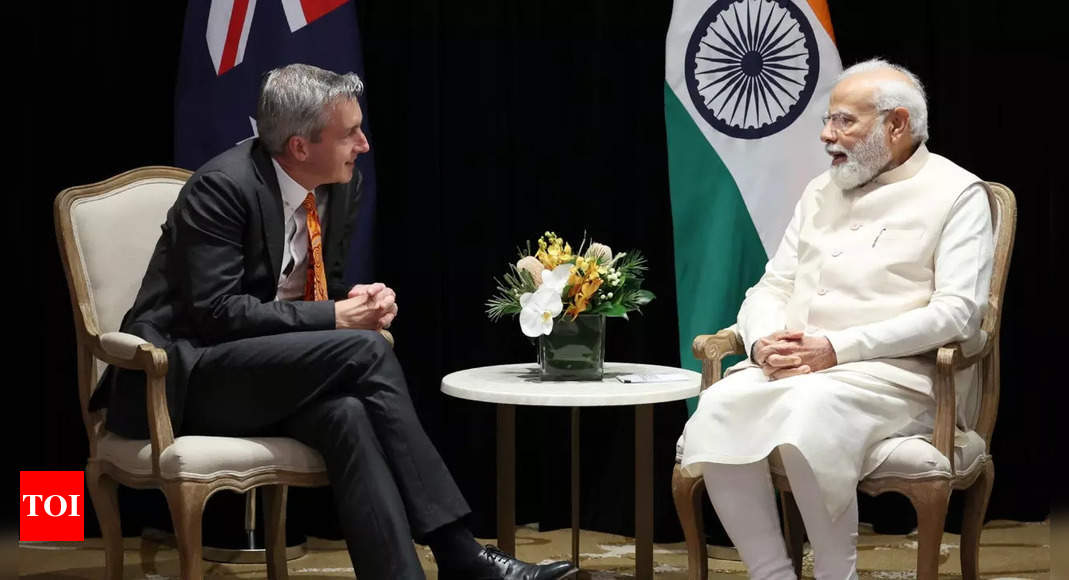
India's Prime Minister Narendra Modi, speaking at the India-Australia CEO Forum in Melbourne on July 9, 2026, made a compelling pitch to Australian businesses, urging them to fuel India's ambitious growth trajectory across critical sectors. This call for deeper economic partnership was immediately underscored by AustralianSuper, the continent's largest pension fund, announcing a significant additional AU$500 million investment into India's National Investment and Infrastructure Fund (NIIF), signaling strong global confidence in India's robust economic future. With India consistently projected as the world's fastest-growing major economy, attracting significant capital is crucial for its target of becoming a $4 trillion powerhouse and ultimately the third-largest global economy by decade-end. This move comes as both nations navigate a period of global uncertainty, supply chain disruptions, and energy challenges, highlighting their shared vision for a stable and prosperous Indo-Pacific. The existing Economic Cooperation and Trade Agreement (ECTA), which has already doubled Indian exports to Australia since 2022, sets a strong precedent, with negotiations for an even broader Comprehensive Economic Cooperation Agreement (CECA) rapidly advancing to further integrate their economies. Modi specifically spotlighted opportunities in manufacturing, clean energy, critical minerals, advanced technologies like AI and semiconductors, and vast infrastructure projects, inviting Australia's expertise and capital. This expanded engagement is expected to intensify collaboration on strategic initiatives such as the new Critical Minerals Corridor and cooperation in civil nuclear energy, with Australia supplying uranium to support India's ambitious 100 GW nuclear energy target by 2047. Australian universities are also establishing more campuses in India, creating a talent pipeline and strengthening people-to-people ties, underscoring a holistic, long-term partnership. Businesses from both sides will now look to leverage these government-backed frameworks, including potential direct partnerships between Indian states and Australian provinces, to convert high-level commitments into tangible projects and achieve the ambitious bilateral trade target of $100 billion by 2030.