Mumbai Water Crisis: Experts Urge Recycled Water Use, Groundwater Revival And Conservation As Lake Levels Drop To 9 Per Cent
Context mode is active. Hover over any highlighted term to see its definition. Click a nested term to go deeper.
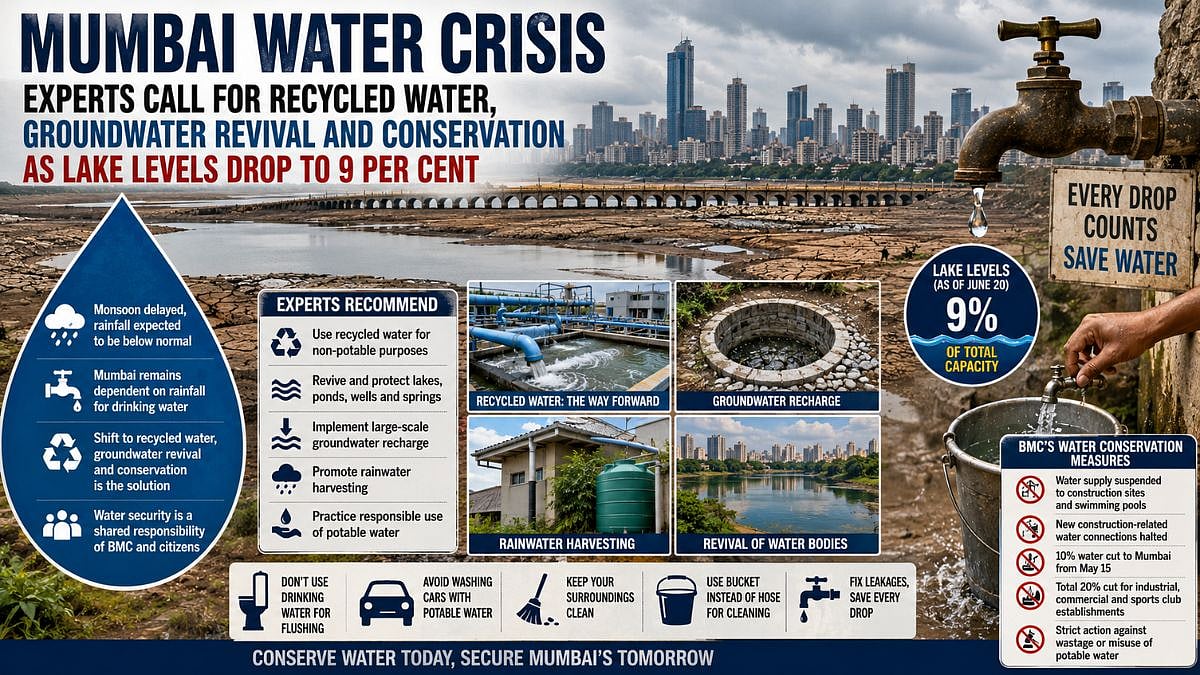
Mumbai is staring down the barrel of a severe water shortage, with the combined water stock in its seven crucial lakes plummeting to a critical 8.68% of total capacity as of June 21, 2026. This alarming drop, which includes Upper Vaitarna reaching 'dead stock' levels, has been exacerbated by a significantly delayed Southwest Monsoon, now anticipated around June 25, nearly two weeks later than usual. The Brihanmumbai Municipal Corporation (BMC) has already enforced stringent water cuts, leaving the city with an estimated 40-45 days of supply if the dry spell continues. The immediate impact is palpable: a 10% residential water cut since May 15 has been intensified with a complete suspension of supply to construction sites and swimming pools, alongside a 20% reduction for industrial and commercial establishments since June 17. This has sent water tanker prices spiralling, hitting both residents and the vital construction sector, which fears project delays and rising housing costs. Experts point to the lingering shadow of El Niño conditions as a key factor in the erratic rainfall patterns, underscoring Mumbai's precarious dependence on seasonal rains. With eyes fixed on the delayed monsoon's arrival, authorities and experts are pushing for long-term resilience beyond rain-fed reservoirs. Proposals include aggressive groundwater recharge initiatives, large-scale deployment of recycled water for non-potable uses across commercial and residential developments, and the urgent revival of traditional water sources like abandoned wells. The Maharashtra Water Resources Department is also working with partners like Tata Motors on broader water conservation projects across the state, signaling a critical pivot towards sustainable urban water management to safeguard Mumbai's future.