NASA plans daring robotic rescue mission to save a space telescope, and the Hubble could be next - Fortune
Context mode is active. Hover over any highlighted term to see its definition. Click a nested term to go deeper.
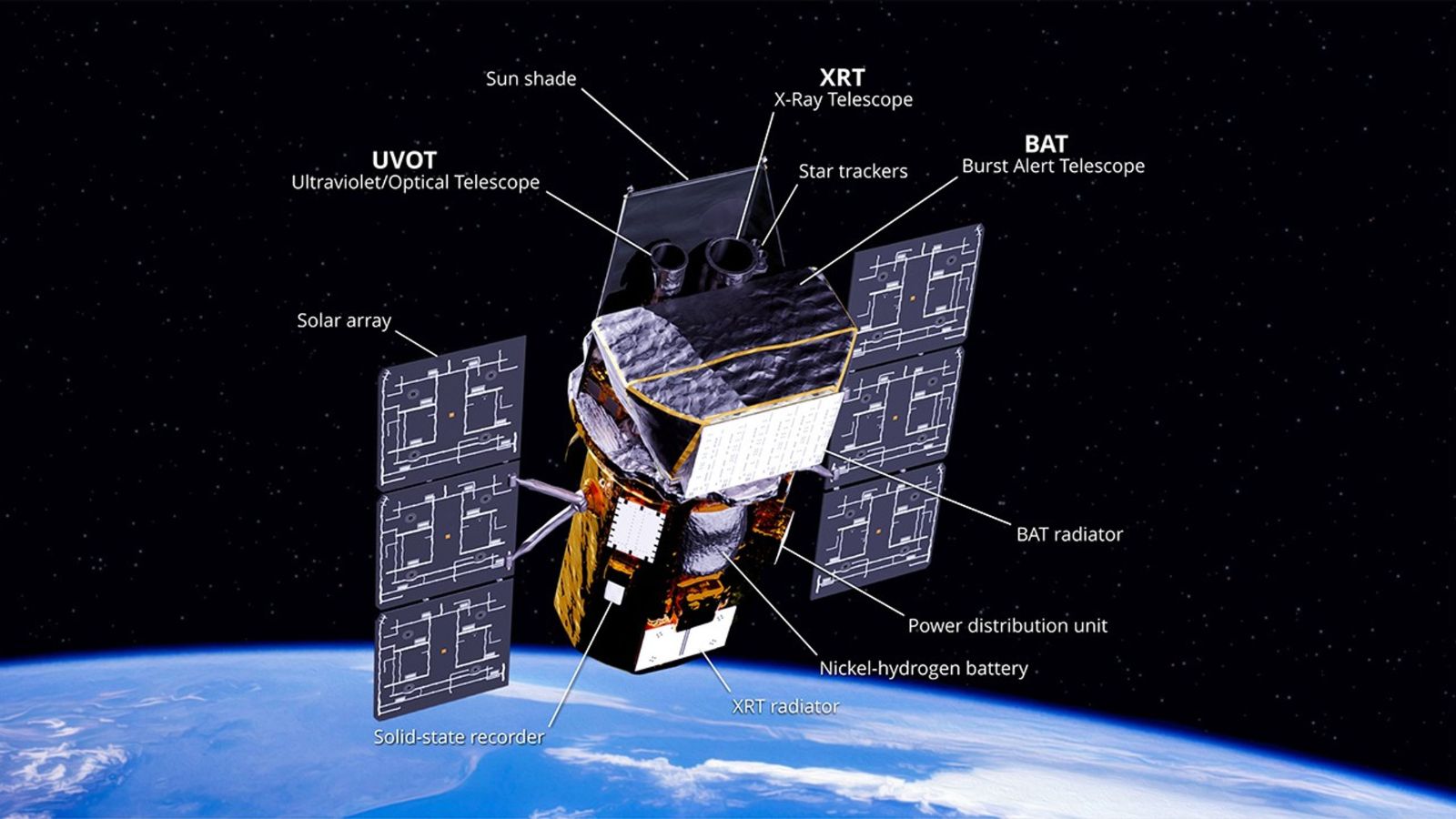
NASA is launching a daring robotic rescue mission on June 30, 2026, to save its aging Neil Gehrels Swift Observatory from falling out of orbit. This unprecedented effort, costing $30 million, will deploy the LINK spacecraft, built by startup Katalyst Space Technologies, to grapple the 22-year-old telescope and push it to a higher, safer altitude, with the successful outcome potentially extending Swift's valuable scientific life for years to come. Swift, originally designed for a two-year mission, has been operating for nearly 22 years, serving as NASA 'first responder' for spotting powerful cosmic events like gamma-ray bursts. However, increased solar activity has expanded Earth's atmosphere, creating more drag and causing the telescope to rapidly lose altitude, threatening its fiery re-entry by October if no action is taken. This mission is critical not just for Swift's unique scientific contributions, but also as a demonstration of a new, cost-effective approach to in-space servicing, especially as other crucial assets like the iconic Hubble Space Telescope face similar orbital decay challenges. Following its launch from Kwajalein Atoll aboard a Northrop Grumman Pegasus XL rocket, the refrigerator-sized LINK spacecraft will spend weeks in orbit for systems checks before attempting the delicate rendezvous and grappling of Swift, with the actual orbit raise expected to take a few months. If successful, Swift's scientific operations, paused since February, could resume by autumn. While a robotic boost for the Hubble Space Telescope has been discussed—and its future vulnerability acknowledged by Katalyst's CEO for a potential 2028 mission—NASA officially declined a SpaceX study offer in 2024, stating Hubble's orbit is currently stable until the mid-2030s. The Swift mission will thus be a crucial proving ground for the future of orbital maintenance.