NASA’s Psyche probe uses Mars to gain momentum and heads to metallic asteroid in 2029
Context mode is active. Hover over any highlighted term to see its definition. Click a nested term to go deeper.
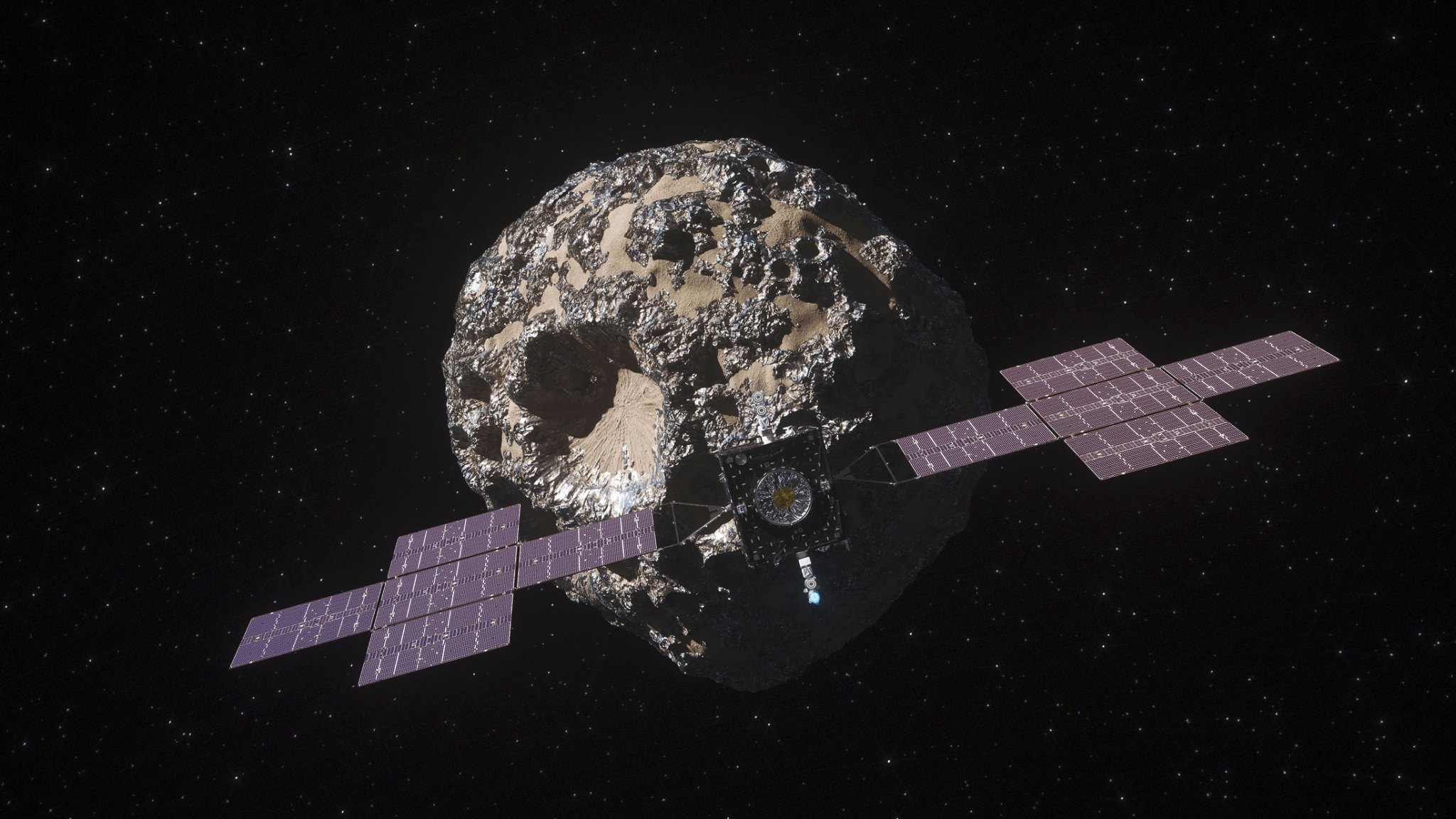
NASA Psyche probe just nailed a critical Mars flyby on May 15, 2026, slingshotting around the Red Planet to gain speed and fine-tune its trajectory toward the mysterious metallic asteroid 16 Psyche, a mission aiming to unlock the secrets of planetary core formation and explore a potential trillion-dollar treasure trove. The successful gravitational assist marks a major milestone, propelling the spacecraft closer to its 2029 rendezvous with a cosmic body believed to be the exposed core of an early planet. This isn't just about a space rock; it's a deep dive into how rocky planets like Earth got their metallic hearts. Scientists are banking on Psyche to offer an unprecedented look at a planetary building block, hoping to resolve debates about whether it's truly a primordial core or a mixed rock-and-metal world, especially after recent James Webb Space Telescope observations hinted at surface hydration (rust). The probe itself is a marvel, utilizing advanced solar electric propulsion via Hall-effect thrusters, alongside a cutting-edge Deep Space Optical Communications system, pushing the boundaries of deep-space travel and communication. Just last year, the mission navigated a xenon propulsion system pressure drop, successfully switching to a backup line to stay on course. With the Mars encounter now in the rearview mirror and its instruments successfully calibrated, Psyche is on a direct path, albeit a long one, to its ultimate destination in the main asteroid belt. The next three years will be a silent cruise through the void, culminating in its arrival and orbital insertion in August 2029, where it will spend 21 months mapping and analyzing 16 Psyche to finally reveal the true nature of this unique metallic world and deepen our understanding of our solar system's violent origins. The data from its Multispectral Imager, Magnetometer, and Gamma-Ray and Neutron Spectrometer will be eagerly awaited by planetary scientists worldwide.