NASA's Roman Telescope Soars, Begins Quest to Unmask Dark Universe and Hidden Worlds
Context mode is active. Hover over any highlighted term to see its definition. Click a nested term to go deeper.
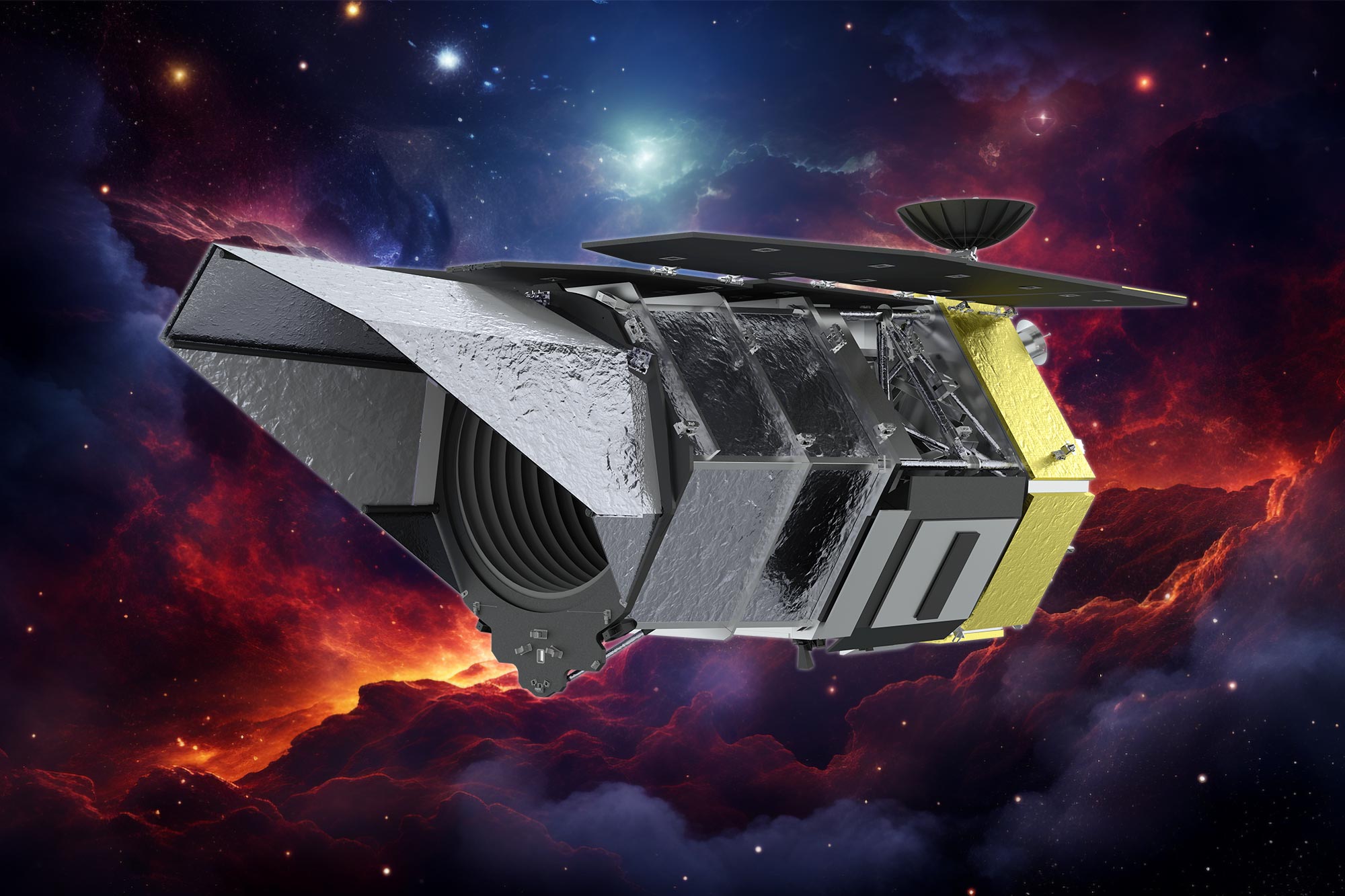
NASA highly anticipated Nancy Grace Roman Space Telescope successfully launched on August 30, 2026, aboard a SpaceX Falcon Heavy rocket, embarking on a three-month journey to its distant cosmic vantage point. This new observatory, with its unprecedented panoramic view, is now in its commissioning phase, poised to revolutionize our understanding of the universe's most profound enigmas, from the accelerating expansion of space to the elusive worlds beyond our solar system. Roman is far from a replacement for its predecessors like the Hubble or James Webb Space Telescope; instead, it's a complementary powerhouse, offering a field of view up to 200 times wider than Hubble's infrared camera while maintaining similar resolution. Equipped with two advanced instruments – the Wide Field Instrument (WFI) and the Coronagraph Instrument (CGI) – Roman will conduct vast surveys to precisely map dark energy and dark matter, and undertake the largest-ever census of exoplanets using techniques like gravitational microlensing. Teledyne, a key partner, has also marked a significant milestone, surpassing 1,000 space-qualified imaging sensors in orbit with Roman launch. As Roman cruises towards the Sun-Earth Lagrange Point 2 (L2), scientists eagerly await the completion of its 90-day commissioning period, with the first scientific observations expected to begin in early 2027. This five-year mission, costing approximately $4 billion, promises to deliver vast datasets that will not only answer existing questions but undoubtedly uncover new mysteries, reshaping astrophysics for decades to come. The collaboration with other observatories, including JWST and ESA's Euclid, highlights a new era of synergistic space exploration, where combining different observational strengths will provide a more complete picture of the cosmos.