NASA's Roman Telescope Soars on Falcon Heavy, Pioneering New Era of Cosmic Discovery
Context mode is active. Hover over any highlighted term to see its definition. Click a nested term to go deeper.
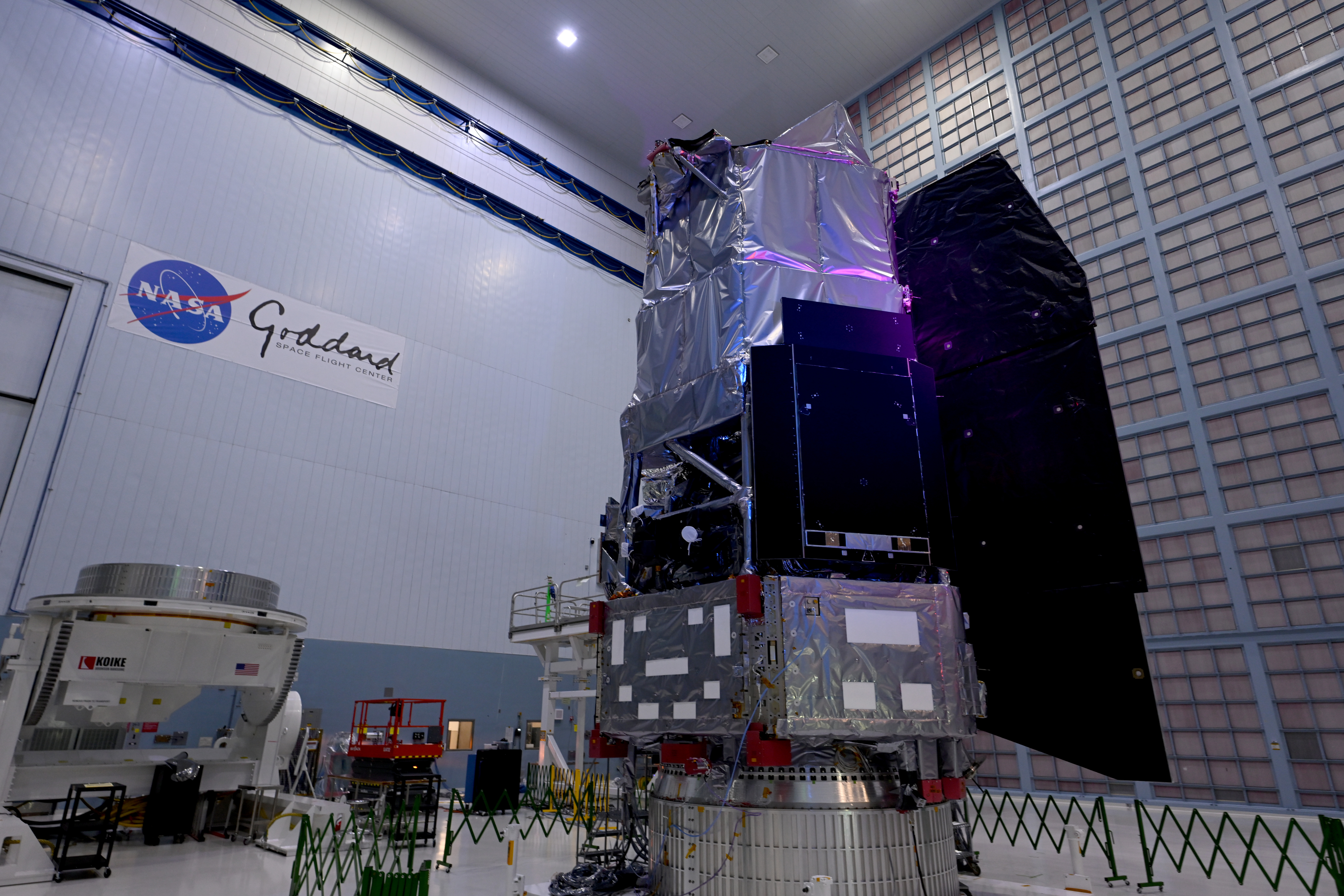
NASA groundbreaking Nancy Grace Roman Space Telescope is set to blast off today, August 30, 2026, aboard a powerful SpaceX Falcon Heavy rocket from Florida's Kennedy Space Center. This next-generation observatory, a major step forward for astrophysics, aims to unlock some of the universe's most profound secrets, from the enigmatic nature of dark energy and dark matter to the widespread hunt for exoplanets. The Roman Space Telescope, equipped with a wide-field view 100 to 200 times larger than the iconic Hubble, is poised to collect an unprecedented amount of data, mapping billions of galaxies and discovering thousands of new exoplanets far faster than previous missions. Its primary mirror, a repurposed Hubble-class mirror originally designed for a spy satellite, underscores a blend of innovation and efficiency, enabling it to study the universe in near-infrared light with exceptional clarity. Scientists hope its observations will provide critical clues about the universe's accelerating expansion and the invisible 'glue' holding galaxies together. Once in space, Roman will journey to the Sun-Earth Lagrange Point 2 (L2), a gravitationally stable observation post already home to the James Webb Space Telescope, promising an unobstructed view of the cosmos. Its five-year primary mission is expected to begin science operations in early 2027 after a commissioning period, producing a colossal public data archive that will fuel discoveries for decades and potentially reveal new insights into the possibility of life beyond Earth.