New Electrolyte Breakthrough Unlocks Sodium-Metal Batteries' High-Performance Future
Context mode is active. Hover over any highlighted term to see its definition. Click a nested term to go deeper.
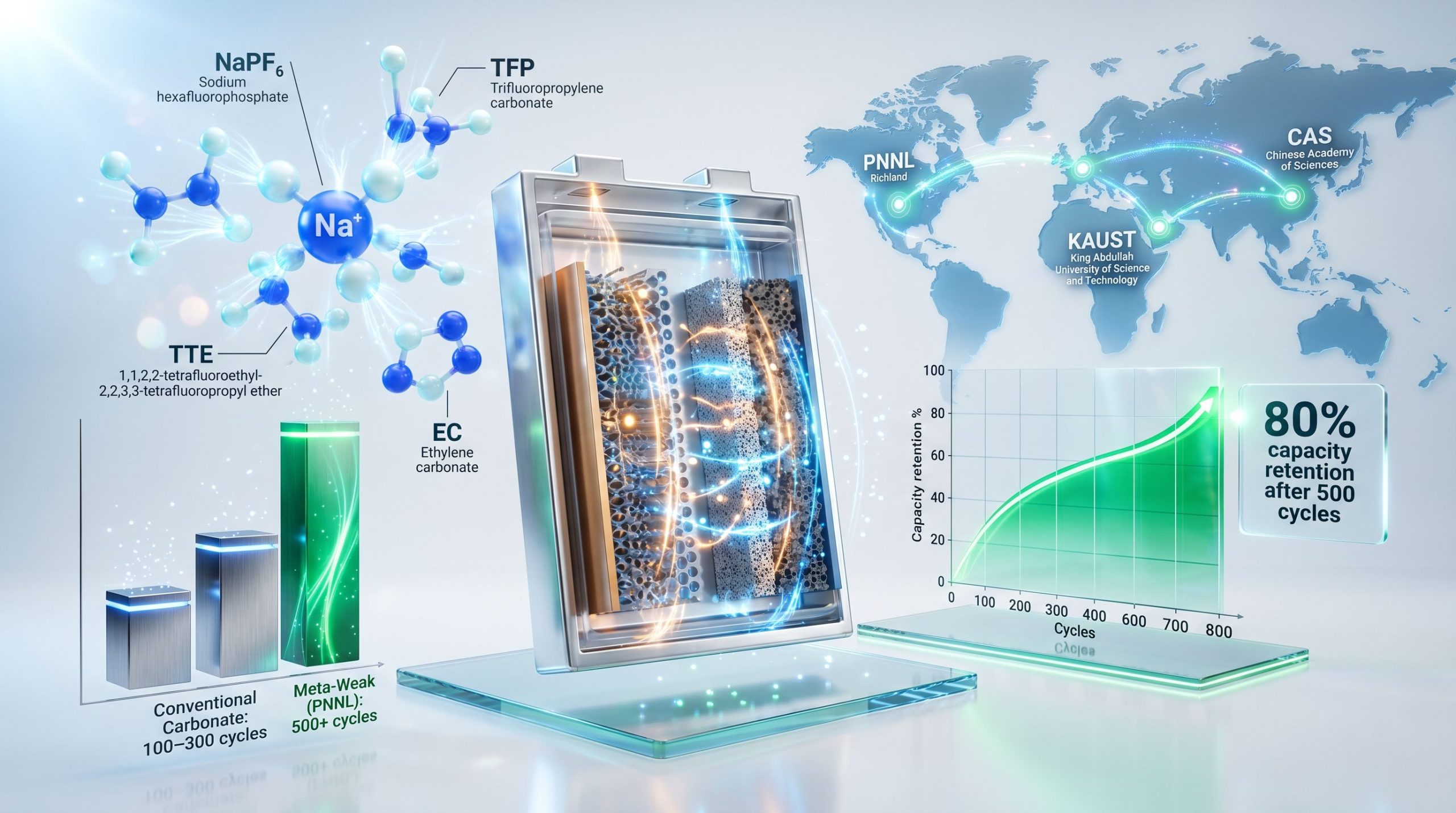
Scientists at MIT have made a significant leap in battery technology, pinpointing new electrolyte formulations that could finally make sodium-metal batteries a practical and powerful energy storage option. This breakthrough directly tackles the long-standing 'solvent problem' by discovering how to engineer electrolyte for better stability and quicker energy flow, including identifying a promising solvent called DMFSA. Meanwhile, researchers at the U.S. Department of Energy's Pacific Northwest National Laboratory (PNNL) recently unveiled a 'meta-weakly solvating electrolyte' that enhances sodium-ion battery performance by optimizing ion movement and stability at the electrode surfaces. These advancements arrive as the global push for alternatives to lithium-ion batteries gains serious momentum, driven by concerns over lithium's cost, finite supply, and complex supply chains. Sodium is a thousand times more abundant and significantly cheaper, making sodium-based batteries a compelling contender, especially for large-scale energy storage. While companies like CATL and Beijing HyperStrong are already commercializing sodium-ion batteries for electric vehicles and grid storage, the real game-changer lies in sodium-metal batteries, which promise even higher energy density but have been held back by their inherent reactivity and stability issues. The immediate focus now shifts to further optimizing these new electrolyte designs and scaling up production to move from lab-based success to real-world application. Researchers will be looking to confirm long-term stability and performance under various conditions, potentially paving the way for sodium-metal batteries to power everything from electric vehicles to vast grid storage facilities. This could fundamentally reshape our energy landscape, offering a cheaper, more sustainable, and safer alternative to current battery technologies in the coming years.