New home for marine species: India’s first 3D-printed reefs to be sunk off Ramanathapuram coast in TN
Context mode is active. Hover over any highlighted term to see its definition. Click a nested term to go deeper.
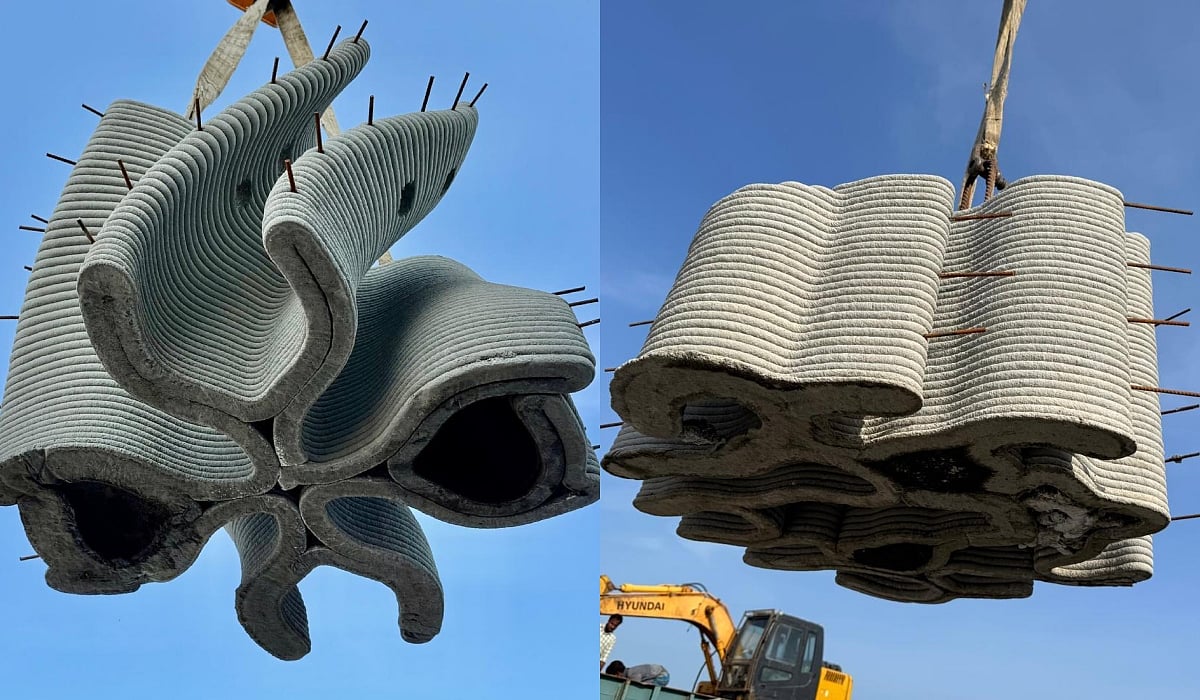
India is making waves in marine conservation with the deployment of its first-ever 3D-printed artificial reef modules off the Ramanathapuram coast in Tamil Nadu today. This groundbreaking initiative, part of the Pradhan Mantri Matsya Sampada Yojana, aims to create new habitats for marine species and boost the region's ecological resilience, showcasing a significant leap in using advanced technology for environmental restoration. Six innovative reef designs, developed by Chennai-based startup Tvasta in collaboration with ICAR-CMFRI, are being sunk to serve as a pilot project. This move comes at a critical juncture as coral reef ecosystems globally face immense pressure from ocean warming and widespread coral bleaching events. Unlike traditional artificial reefs, these new 3D-printed modules boast complex geometries with numerous crevices and folds, designed to mimic natural reef structures more effectively and provide superior attachment surfaces for marine organisms without using iron reinforcement. The project not only seeks to improve fish stocks and marine biodiversity in areas like the Gulf of Mannar, a significant marine hotspot, but also promises long-term benefits for the livelihoods of local fishing communities who depend on healthier oceans. The pilot deployment will be closely monitored to evaluate the durability and ecological performance of these advanced modules under local coastal conditions. Scientists will assess their success in attracting marine life and supporting ecosystem recovery, which will inform potential larger-scale deployments across India's coastline. This pioneering effort could position India as a leader in innovative marine habitat restoration, offering a scalable solution to protect and revitalize its vital marine ecosystems for future generations.