New Research Reveals El Niño's Unbalanced Grip on Global Water Supplies
Context mode is active. Hover over any highlighted term to see its definition. Click a nested term to go deeper.
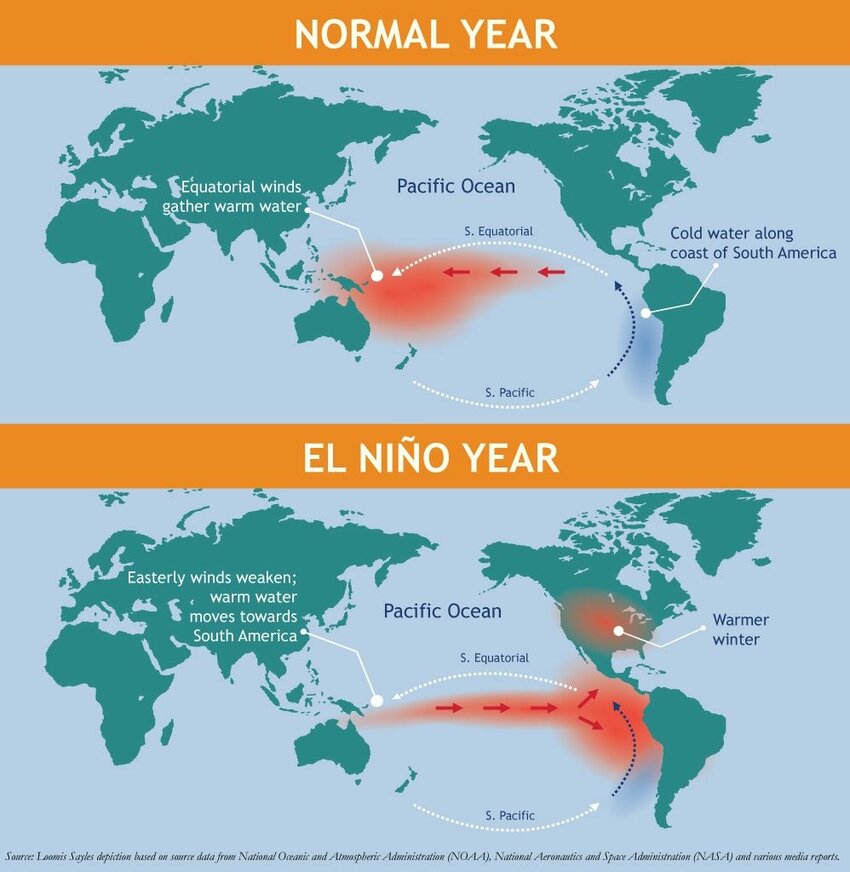
A groundbreaking study published in Communications Earth & Environment (part of Nature Portfolio) reveals that El Niño and La Niña, the two main phases of the El Niño–Southern Oscillation (ENSO), have a significantly 'asymmetric signature' on the world's water storage. This means their impacts on global water availability—from groundwater to soil moisture—are not just opposite, but distinctly different in how and where they cause drying or wetting. The findings come as global forecasts predict a potentially 'very strong' El Niño event forming in the coming months, which could break previous records. The research, which used machine-learning to reconstruct water storage anomalies from 1984 to 2023, highlights that La Niña actually affects a larger land area, impacting 20% more regions globally than El Niño, and causes drying across nearly half of all ENSO-affected areas. While El Niño often brings stronger ocean warming, La Niña tends to last longer, leading to different land-surface water retention and response times that shape droughts and floods differently worldwide. This new understanding is crucial, especially considering a mild La Niña in 2025 temporarily slowed sea level rise by pushing water onto land, while the intensifying El Niño in 2026 is already threatening severe heatwaves and altered rainfall patterns. This deeper insight into ENSO's uneven hydrological influence means we must rethink how we prepare for and manage water-related crises. With climate change amplifying extreme weather events, making swings between El Niño and La Niña potentially more intense and frequent, knowing these asymmetric effects is vital for forecasting regional droughts, floods, and agricultural impacts. Governments and humanitarian agencies are already relying on these advanced forecasts from organizations like the World Meteorological Organization's Global Producing Centres to make informed decisions and build resilience against future water shocks.