Non-citizen households use welfare at higher rates than U.S.-born, study finds
Context mode is active. Hover over any highlighted term to see its definition. Click a nested term to go deeper.
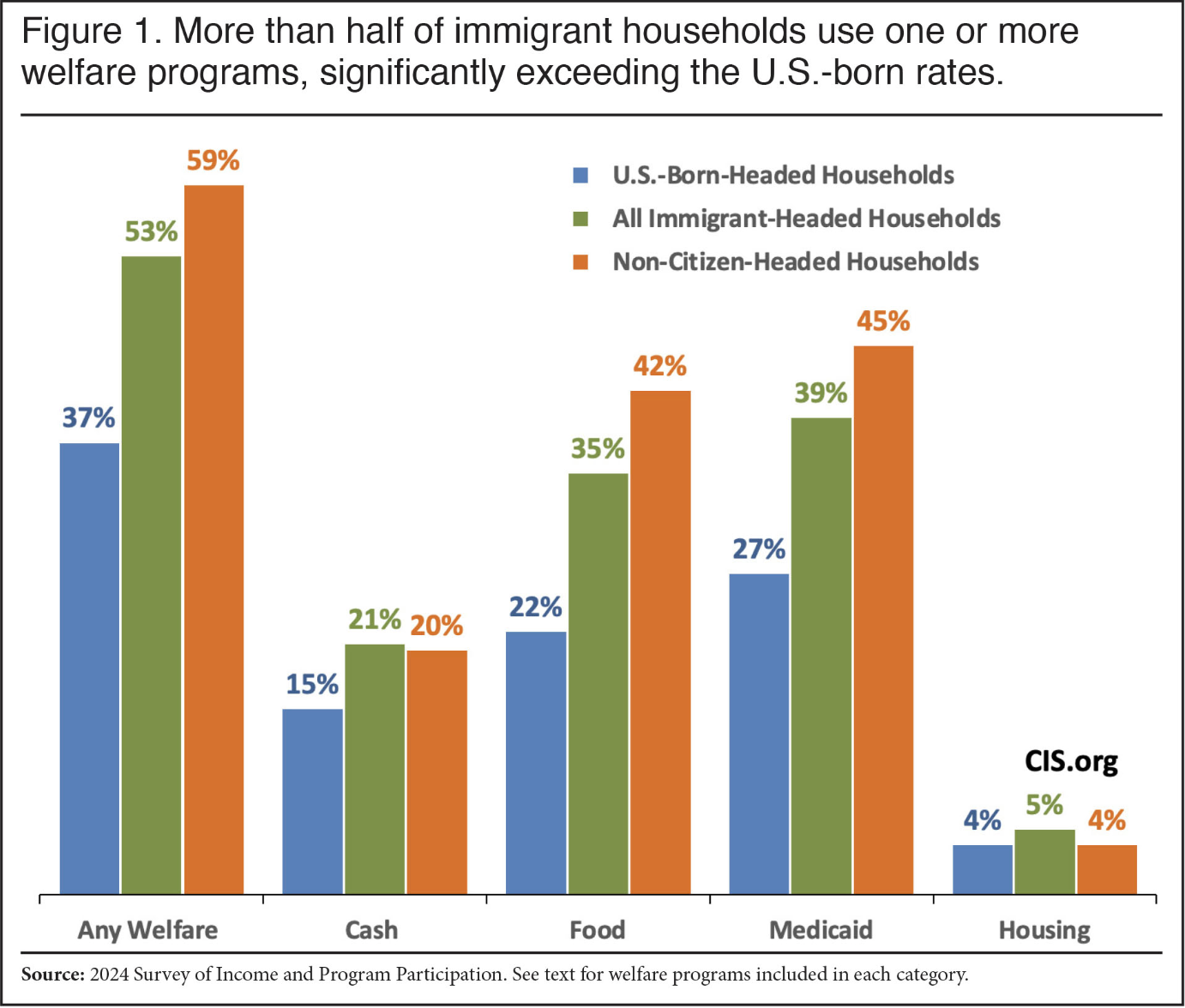
A new analysis by the Center for Immigration Studies (CIS), released this Thursday, reveals that households headed by non-citizens utilize means-tested welfare programs at significantly higher rates than those led by U.S.-born Americans across nearly every state. The study, drawing on a comprehensive five-year sample of Census Bureau data, found that 47% of non-citizen-headed households accessed at least one traditional welfare program, a striking 19-percentage-point gap compared to 28% for U.S.-born households. This finding intensifies an already polarized debate surrounding immigration's fiscal impact on the U.S. social safety net. CIS researchers Steven Camarota and Karen Zeigler highlight that the disparity persists despite federal restrictions on non-citizen welfare access, largely because non-citizen parents can claim benefits on behalf of their U.S.-born children, who are automatically eligible. While the study emphasizes that higher welfare use is not linked to lower workforce participation among non-citizen households, it points to factors like lower educational attainment and resultant lower incomes as key drivers of eligibility. This contrasts with analyses from the Cato Institute, which, using a per capita methodology, often concludes that immigrants generally consume less in overall welfare and entitlement benefits than native-born Americans, underscoring a critical methodological fault line in the public discourse. The immediate fallout from this report is expected to further fuel legislative efforts to tighten welfare access for non-citizens, such as the 'Safeguarding Benefits for Americans Act' reintroduced by Representative Glenn Grothman and the 'No Welfare for Non-Citizens Act' proposed by Representative Randy Fine in late 2025. As the U.S. grapples with ongoing immigration challenges and perennial debates over social spending, this latest data from CIS will undoubtedly become a central talking point in policy discussions and upcoming electoral campaigns, forcing policymakers to confront the complex interplay between immigration status, household economics, and the nation's welfare infrastructure.