North Korea Condemns US 'Nuclear Submarine Alliance,' Fuels Own Arms Race
Context mode is active. Hover over any highlighted term to see its definition. Click a nested term to go deeper.
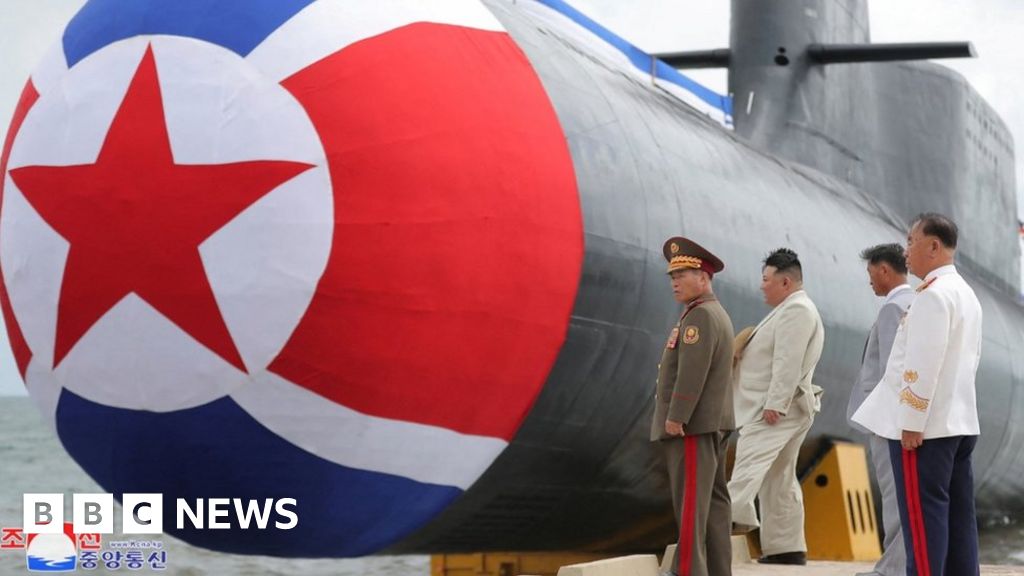
North Korea has sharply criticized the United States for allegedly pushing South Korea and Japan to acquire nuclear-powered submarines, seizing the moment to justify its own ongoing nuclear weapons development. Pyongyang, through its state-run Korean Central News Agency (KCNA), called Washington 'the major chieftain of the worldwide nuclear proliferation,' just after a US Navy official in Hawaii made remarks on Seoul and Tokyo's submarine ambitions [5, 6, 22]. This latest salvo significantly ratchets up regional tensions and underscores the growing arms race in the Indo-Pacific. The North Korean commentary specifically pointed to Washington's use of AUKUS – the security pact involving the US, UK, and Australia for nuclear submarine technology transfer – as a blueprint for what it called 'AUKUS 2.0,' aiming to extend such capabilities to other allies [5, 6, 13]. While a US Navy official expressed a favorable view of Japan potential for nuclear submarines, they cautioned South Korea against pursuing them merely as a 'status symbol,' urging a clear operational rationale instead [5, 18, 28]. Meanwhile, South Korea is actively moving forward with plans for its own nuclear submarines, targeting a mid-2030s launch and allocating significant funds for design, even notifying the International Atomic Energy Agency (IAEA) of its intentions [8, 9, 14, 16]. Japan is also seriously considering the option as part of its defense review [15, 17, 25]. This exchange signals a deepening cycle of military expansion in Northeast Asia, with North Korea explicitly stating it must 'bolster up its nuclear war deterrent means both in quality and quantity' [6, 10]. As South Korea and Japan weigh their future naval strategies, likely including a debate on the costs and strategic roles of nuclear submarines beyond purely defensive operations, the coming months will reveal if these moves lead to further arms races or new diplomatic efforts to manage regional security. The region is now on watch for how these strategic shifts will impact the already fragile nuclear non-proliferation regime.