Oil Surges as US Revokes Iran Export License Amid Escalating Strait of Hormuz Crisis
Context mode is active. Hover over any highlighted term to see its definition. Click a nested term to go deeper.
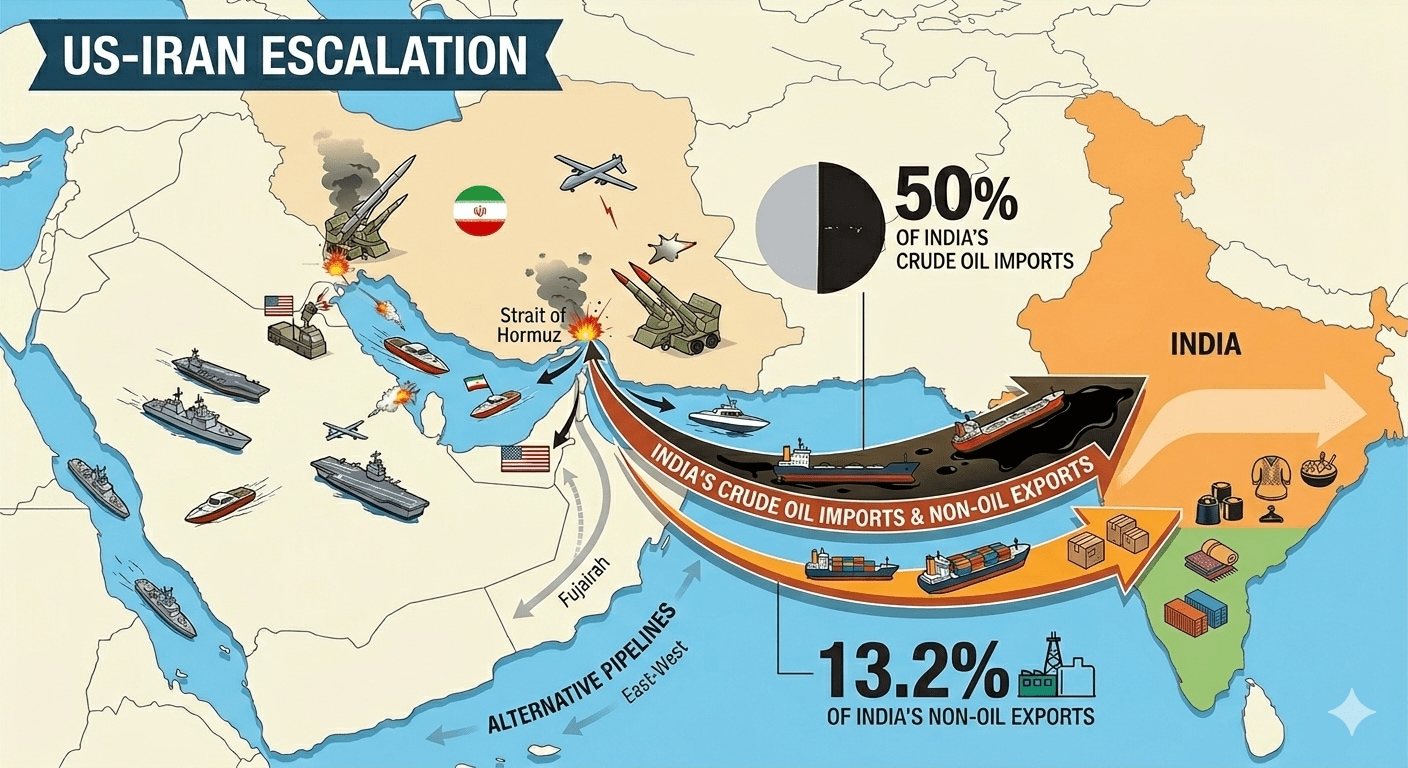
Global oil prices have spiked by over 5% following a sharp escalation in tensions between the United States and Iran, triggered by fresh attacks on commercial vessels in the strategic Strait of Hormuz. The US swiftly responded by revoking a key license that allowed the sale of Iranian oil, a move immediately met with retaliatory missile and drone strikes from Iran against US military sites in the Gulf region. This rapid unraveling threatens a fragile interim peace deal and plunges the crucial oil transit waterway into renewed uncertainty. The latest crisis erupted after Iran reportedly used drones and missiles to target at least three tankers in the Strait on July 6 and 7, which the US deemed 'wholly unacceptable' violations of a Memorandum of Understanding (MOU) signed last month. That MOU aimed to halt hostilities and reopen the Strait of Hormuz, offering Iran sanctions relief in exchange for compliance. However, Iran's Foreign Ministry has blasted the US license revocation and retaliatory strikes as breaches of the same agreement, deepening the diplomatic chasm and reigniting a war that had seen a period of relative calm. With both sides trading military blows and accusations, the immediate future for global energy supplies hangs in the balance. Oil benchmarks like Brent crude and West Texas Intermediate surged, reversing recent declines, as analysts warn that persistent instability in the Strait of Hormuz will keep upward pressure on prices. Observers will be watching for further military responses from either side and whether diplomatic channels, despite the current animosity, can be reopened to prevent a broader conflict that would have severe global economic repercussions.