Palantir's AI Wins Pentagon's Long-Term Trust, Becoming Military's Brain
Context mode is active. Hover over any highlighted term to see its definition. Click a nested term to go deeper.
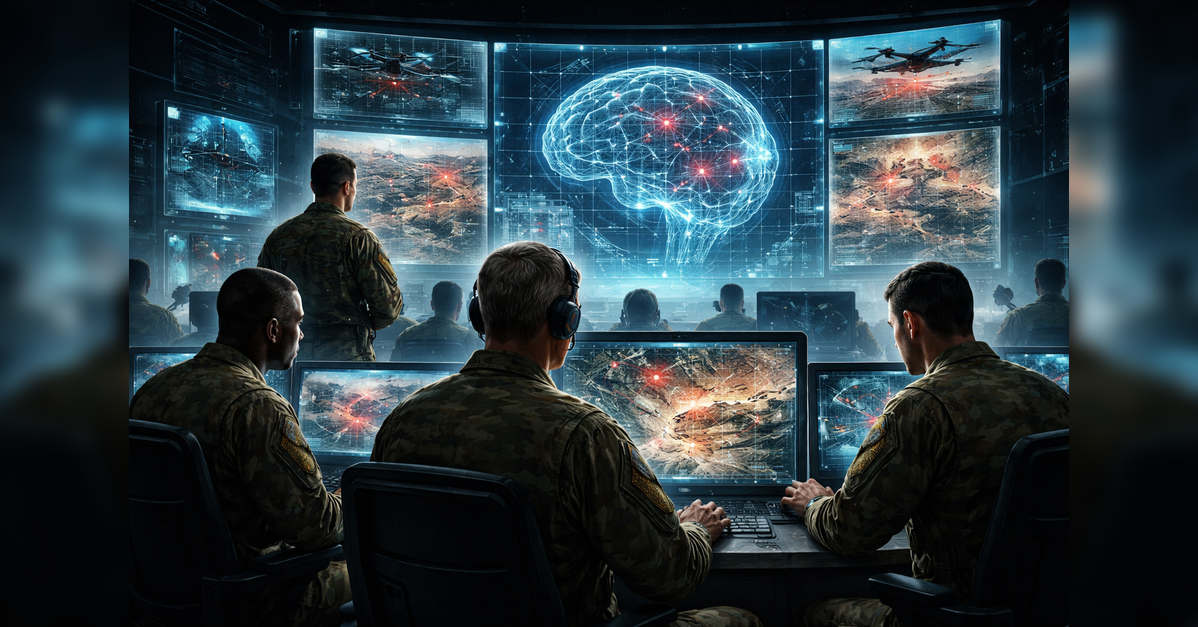
Palantir Technologies has secured a pivotal role at the heart of the Pentagon AI strategy, with its Project Maven now formalized as a long-term 'program of record'. This significant move positions Palantir's software as the primary Artificial Intelligence operating system for the U.S. military, allowing it to integrate and orchestrate various AI models and vast data sources, effectively winning regardless of which specific AI technology gains dominance. This isn't just another contract; it's a strategic embrace of Palantir's vision for data-driven warfare, transforming how the military processes massive amounts of intelligence from drones and satellites to accelerate decision-making from hours to minutes. The firm's platforms, including Palantir Foundry and its Artificial Intelligence Platform (AIP), are also foundational to critical initiatives like the Army's Next Generation Command and Control (NGC2) program and a massive $10 billion Enterprise Agreement. This deep integration ensures that Palantir is building the connective tissue for military operations, even as other tech giants like Google and Microsoft also compete for defense AI contracts. The formalization of Maven and these expanding contracts signal a clear direction for the Pentagon: an 'AI-first' fighting force where Palantir's technology is indispensable. While this solidifies Palantir's market position, it also intensifies scrutiny over data governance, the ethics of AI in warfare, and the increasing reliance on a single vendor for critical defense infrastructure. The focus will now shift to how seamlessly these systems scale across diverse military operations and how new AI advancements, like Large Language Models, will be integrated securely and effectively, especially following concerns like the recent Pentagon ban on Anthropic's Claude AI in Maven due to supply chain risks.