PM Modi Pushes States To Tap FTA Benefits, Draw Investments At Niti Aayog Meeting
Context mode is active. Hover over any highlighted term to see its definition. Click a nested term to go deeper.
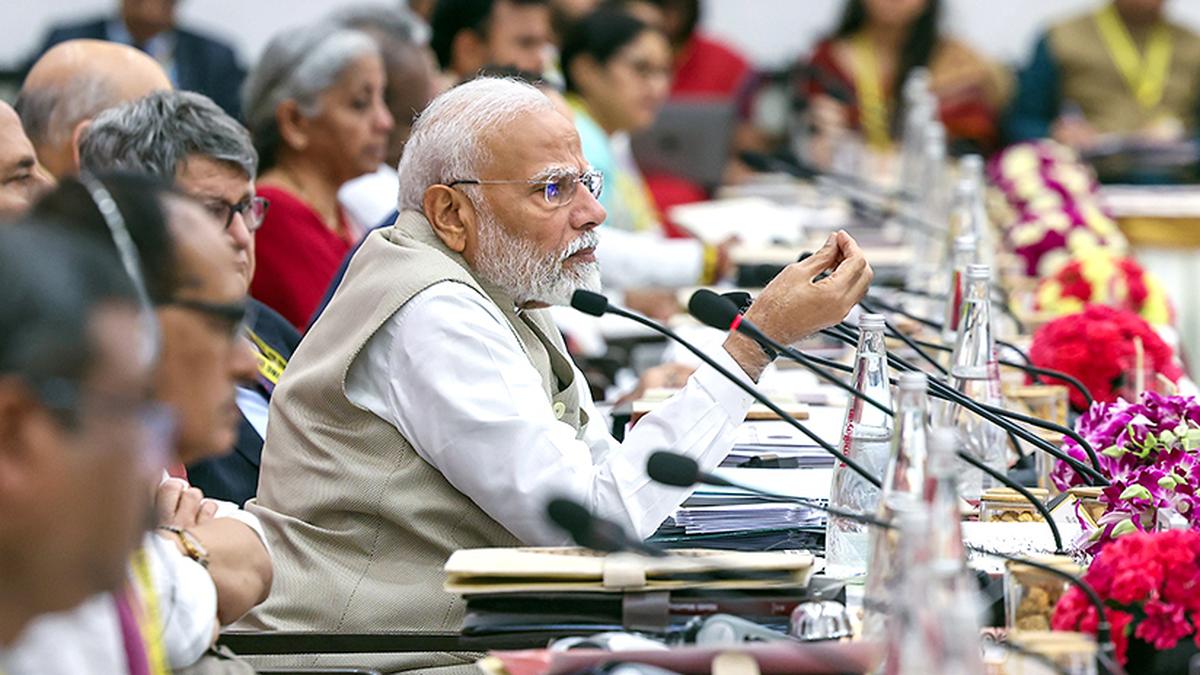
Prime Minister Narendra Modi recently pressed Indian states to aggressively leverage the nation's burgeoning portfolio of Free Trade Agreements (FTAs) and actively court investments, particularly in the rapidly expanding sectors of data centres and artificial intelligence. Speaking at the 11th Niti Aayog Governing Council Meeting on June 11, Modi underscored that AI should be embraced as a monumental opportunity, not a looming challenge, as India charts its course towards 'Viksit Bharat @2047'. This directive marks a significant federal push for states to become frontline economic drivers, aligning regional strategies with national growth ambitions. The timing is critical, following India's landmark FTA signings in late 2025 and early 2026 with key economic blocs like the European Union and the United States, along with bilateral agreements with the UK, Oman, and New Zealand. These agreements, heralded by Commerce Minister Piyush Goyal as unlocking substantial market access and investment commitments, represent a strategic pivot in India's global trade posture. Concurrently, the Union Budget 2026-27 introduced significant tax incentives, including a tax holiday until 2047 for eligible foreign cloud service providers operating through Indian data centres, reinforcing the nation's ambition to become a global hub for AI and cloud infrastructure. Such policy alignments are designed to magnetize Foreign Direct Investment (FDI) into these high-growth areas, integrating Indian states deeper into global supply chains. Looking ahead, states are expected to translate this federal mandate into actionable policies, simplifying Ease of Doing Business frameworks, and offering targeted incentives to attract capital into digital infrastructure and AI development. The Niti Aayog meeting, themed 'Inclusive Human Development for Viksit Bharat @2047,' emphasized collaborative efforts between the Centre and States, highlighting a concerted drive towards fostering entrepreneurship, enhancing skills, and creating sustainable employment. The success of this strategy hinges on how effectively states can de-risk new investments and provide the stable regulatory environment crucial for scaling next-generation technologies, ultimately determining India's trajectory as a global economic powerhouse.