Poetic spar over VCK joining govt
Context mode is active. Hover over any highlighted term to see its definition. Click a nested term to go deeper.
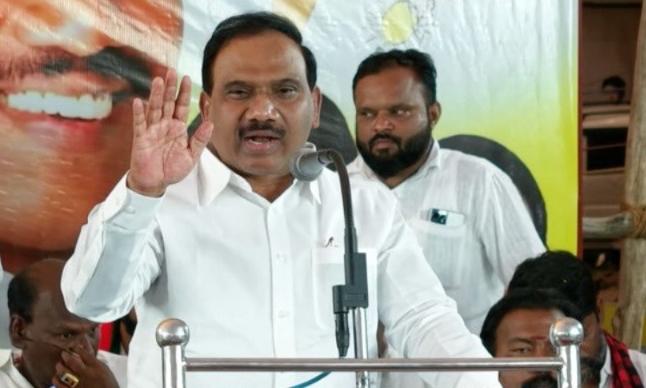
A recent "poetic spar" has erupted within Tamil Nadu's political circles, centering on the Viduthalai Chiruthaigal Katchi (VCK) and its long-standing aspiration for ministerial berth within the Dravida Munnetra Kazhagam (DMK)-led government. The exchange saw Indian Union Muslim League (IUML) leader K.M. Kader Mohideen employ the "ladder" metaphor, implying VCK was leveraging its alliance with the DMK for political ascent. In a sharp retort, VCK President Thol. Thirumavalavan, drawing on his party's identity, asserted VCK status as a "panther" (Chiruthai, the literal meaning behind VCK name), not a mere ladder. He further added a subtle dig, stating the panther doesn't need a "whistle"—the election symbol of actor Vijay's newly formed Tamizhaga Vetri Kazhagam (TVK)—to announce its presence, highlighting VCK established political gravitas. This nuanced political jousting underscores the intricate dynamics of coalition politics in India, particularly within the multi-party landscape of Tamil Nadu. For the VCK, a prominent voice for Dalit politics and social justice, securing cabinet representation is a crucial demand for power-sharing and symbolic recognition, given its consistent electoral contributions to the ruling Secular Progressive Alliance (SPA). The sparring reveals the constant negotiations and power struggles inherent in maintaining alliance cohesion, especially as established partners like IUML and ascending forces like TVK navigate their own political ambitions. Such internal maneuvers are critical not just for individual parties but also for the long-term stability and representativeness of state governance, potentially influencing resource allocation and policy direction in India's economically significant southern state.