Princeton's PACMAN AI Masterfully Tames Sun-Hot Fusion Plasma, Accelerating Clean Energy Future
Context mode is active. Hover over any highlighted term to see its definition. Click a nested term to go deeper.
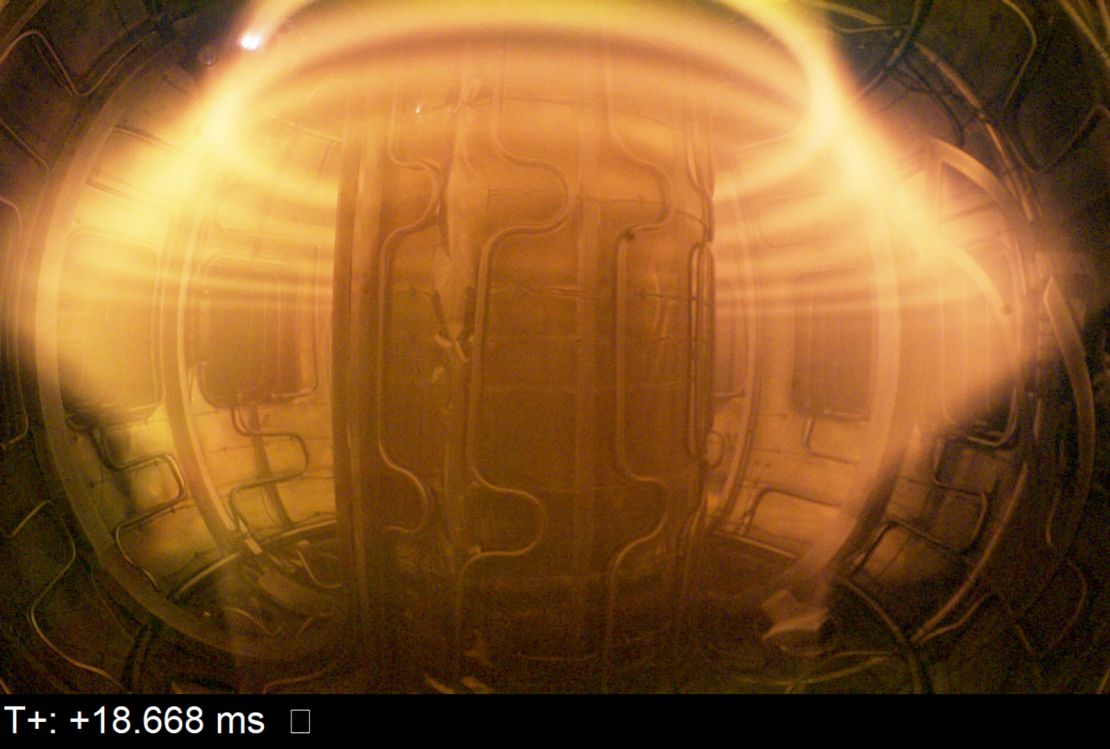
Princeton's PACMAN AI has achieved a breakthrough in controlling super-hot fusion plasma, a key step toward limitless clean energy. This AI system can react in milliseconds to predict and prevent dangerous plasma instabilities, a speed impossible for human operators. Tested successfully on the DIII-D tokamak, PACMAN represents a significant leap in managing the extreme conditions required for fusion. For decades, scientists have grappled with the challenge of keeping fusion plasma – an electrically charged gas hotter than the sun – stable enough to sustain energy production. Tiny disturbances, known as plasma instabilities like 'tearing modes' or 'edge-localized modes', can quickly ruin the reaction. PACMAN's modular design, developed by researchers from Princeton University and the U.S. Department of Energy's Princeton Plasma Physics Laboratory, is a game-changer because it can integrate different AI models to tackle these complex, fast-evolving problems in real time. This breakthrough comes amidst growing global investment in fusion, with private companies raising billions and governments worldwide pushing for commercial fusion by 2026. This development marks a critical step towards practical fusion power plants, which promise a virtually unlimited, carbon-free energy source. While human operators will still set the overall goals and safety limits, PACMAN's ability to make instantaneous adjustments could accelerate fusion research and development significantly. The modular nature of PACMAN also means it can be adapted for different fusion machines, paving the way for a more standardized approach to AI control across the fusion community. The next big thing to watch is how this framework can be scaled up and applied to larger, more complex experimental reactors like ITER.