Private Casteist Slurs: Supreme Court Says Not Enough for SC/ST Act Charges
Context mode is active. Hover over any highlighted term to see its definition. Click a nested term to go deeper.
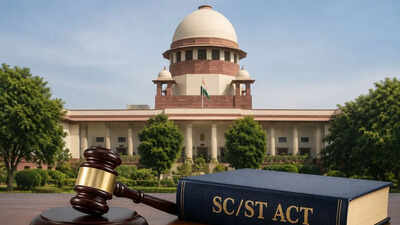
In a landmark ruling on August 20, 2026, India's Supreme Court clarified that an alleged casteist slur uttered behind closed doors, away from public sight or hearing, cannot automatically trigger charges under the stringent Scheduled Castes and the Scheduled Tribes (Prevention of Atrocities) Act, 1989. The bench, comprising Justices Vikram Nath and Sandeep Mehta, emphasized that the crucial 'public view' test is a must-have for such offenses, overturning an Allahabad High Court order against a school manager accused of using caste-based abuse in a private room. This decision carries significant weight, refining the scope of a law designed to combat atrocities against Scheduled Castes and Scheduled Tribes, particularly Sections 3(1)(r) and 3(1)(s) which deal with intentional insult and humiliation. The Supreme Court highlighted that for these sections to apply, the insult must genuinely occur in a setting where the public can witness or hear it, reinforcing its earlier stance in cases like Hitesh Verma v. State of Uttarakhand (2020). Critics and proponents of the Act have long debated its implementation, with concerns often raised about its potential misuse in private disputes versus its critical role in protecting marginalized communities. While the SC/ST Act charges against the school manager, Ramkrishna Chauhan, have been quashed, the Court noted that proceedings for other alleged offenses under the Indian Penal Code, such as assault or wrongful confinement, will continue. This ruling sets a clear precedent for how lower courts will interpret the 'public view' requirement moving forward, potentially leading to more rigorous scrutiny of First Information Report under the SC/ST Act, ensuring that the intent and context of the alleged offense align with the statutory provisions.