Rare earths: the Chinese monopoly to make the economy tremble
Context mode is active. Hover over any highlighted term to see its definition. Click a nested term to go deeper.
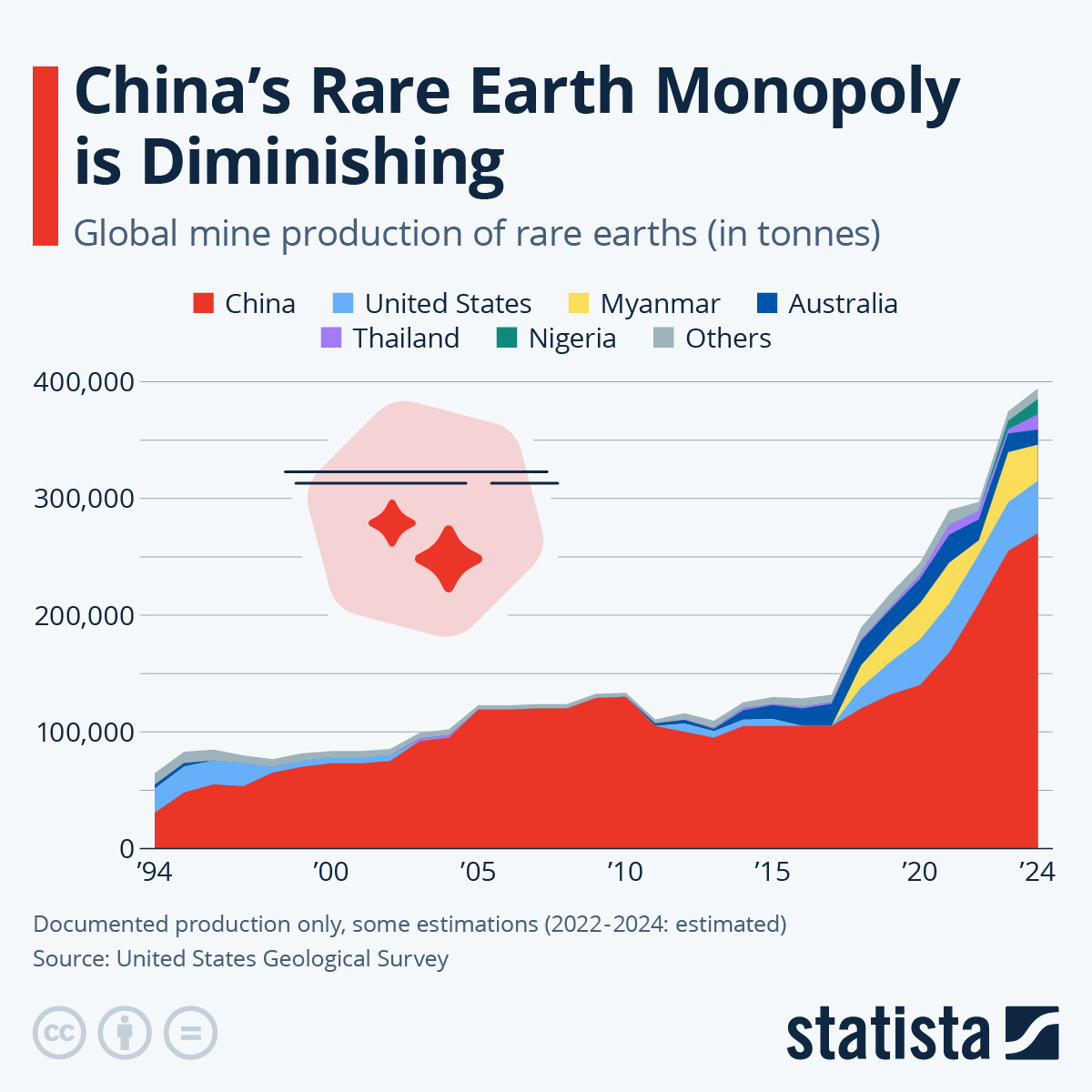
China's economic weaponization of rare earths has dramatically escalated, with recent data revealing negligible shipments of key heavy rare earths to Japan, a direct consequence of ongoing diplomatic friction over Taiwan. This move underscores Beijing's tightening grip on critical mineral supply chains, even as G7 nations just committed in Évian to a concerted effort to significantly reduce their reliance on any single supplier by 2030 through massive investments and coordinated strategies. Beijing's strategy isn't new, but its recent actions are bolder: updated export licensing requirements for various rare earth compounds came into force in March 2026, expanding on April 2025 restrictions that targeted seven heavy rare earth elements. Crucially, a looming November 10, 2026 deadline will reinstate China's 'extraterritorial provisions' – rules that could regulate controlled materials even after they leave Chinese territory, sending shivers through global manufacturing dependent on these materials for everything from smartphones to advanced weaponry. This is more than just trade friction; it's a structural shift aimed at shaping global industrial behavior and extracting political concessions. In response, the US and EU formalized a Critical Minerals MOU in April 2026, aiming to coordinate production, explore price floors, and secure alternative supplies. The G7's latest declaration backs this with 195 new projects and 64 billion euros in investment announced since early 2026 to de-risk supply chains. However, building out non-Chinese capacity, particularly in midstream processing, remains a gargantuan task that won't fully alleviate dependencies in the short term, ensuring that geopolitical maneuvering around these indispensable elements will only intensify as the November deadline approaches.