Resident doctors in England call off strike action after new government offer
Context mode is active. Hover over any highlighted term to see its definition. Click a nested term to go deeper.
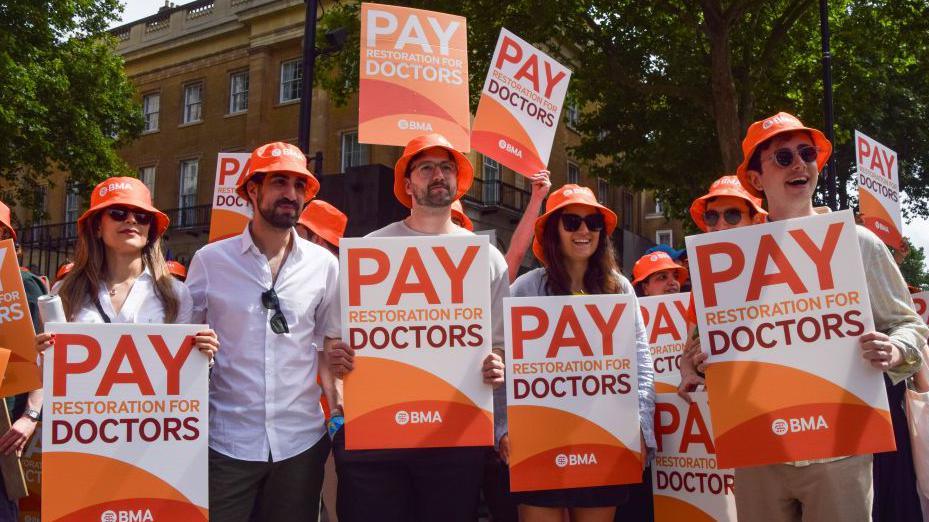
England's resident doctors have provisionally halted their latest four-day strike, the 16th since 2023, after the government tabled a last-minute pay offer including an average 6.6% uplift to be fully implemented by April 2027. This eleventh-hour deal, announced by the British Medical Association (BMA) on Saturday, prevents widespread disruption to NHS services that was set to begin Monday, June 15th. The agreement now heads to a referendum by tens of thousands of frontline doctors, marking a critical juncture in the protracted dispute. The long-running industrial action by resident doctors, formerly known as junior doctors, has been fueled by claims of a 26% real-terms pay erosion since 2008-09 and significant staffing pressures within the National Health Service (NHS). Previous offers, including one rejected in March 2026 that featured a 3.5% pay rise for the current year, failed to meet the BMA's demands for 'full pay restoration' and improved working conditions. The current Health Secretary, James Murray, who replaced Wes Streeting in May 2026, previously deemed the BMA's demands unrealistic, highlighting that resident doctors have already seen a 28.9% pay increase over the last three years. The BMA's militancy, influenced by the 'Doctors Vote' grassroots movement, has at times created friction even with other NHS unions. Looking ahead, the fate of the new offer rests squarely with the resident doctors themselves, who will vote in a forthcoming referendum. Dr. Jack Fletcher, chair of the BMA's resident doctors committee, has warned of 'further escalated action' in July if members reject the proposal. Beyond the pay aspect, the offer includes commitments to 4,500 new specialty training places over three years and improved terms for Locally Employed Doctors, signaling a broader attempt to address systemic workforce issues within the NHS. The outcome will significantly impact not only healthcare provision but also the government's ability to demonstrate stability in public sector industrial relations, particularly following the appointment of a new Health Secretary.