Rubio Warns Venezuelan Election Path Requires Patience, Months of Progress
Context mode is active. Hover over any highlighted term to see its definition. Click a nested term to go deeper.
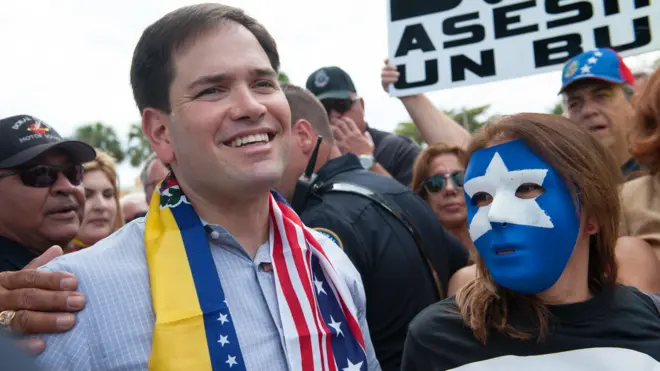
US Secretary of State Marco Rubio has cautioned that Venezuela's path to truly free and fair elections remains a 'work in progress,' emphasizing that a genuine democratic transition will unfold over 'months and weeks rather than years'. His remarks, made on August 4, come amidst newly resumed US-backed talks in Caracas between Venezuela's ruling party and certain opposition factions, just seven months after the Trump administration's intervention led to the removal of former leader Nicolás Maduro. The push for patience highlights the complex roadmap ahead for the South American nation. The ongoing dialogue, which kicked off on August 1, involves National Assembly President Jorge Rodríguez and former opposition lawmaker Dinorah Figuera, aiming to establish electoral guarantees and institutional reforms. However, a significant fault line remains: prominent opposition leader María Corina Machado, who reportedly won the disputed 2024 election alongside Edmundo González, is notably absent from these negotiations, arguing the process lacks her bloc's input. This backdrop is further complicated by a bipartisan push from US Senators, including Jeanne Shaheen and Ted Cruz, who introduced a resolution this week demanding concrete steps like the release of political prisoners and accountability for any harm to candidates. Rubio's 'three-phase plan' for Venezuela — stabilization, recovery, and then elections — signals a long-game strategy, particularly after devastating June earthquakes underscored the urgent need for governance stability. For a truly credible electoral process, basic freedoms like a free press, multi-party participation, national reconciliation, and an independent Electoral Council are non-negotiable. As Venezuela navigates this delicate period, the global community will be watching closely to see if incremental progress can lead to a lasting democratic future, or if deep-seated political divisions will continue to stall genuine change.