Scientists Engineer 'Almost Alive' Synthetic Cell Capable of Full Life Cycle
Context mode is active. Hover over any highlighted term to see its definition. Click a nested term to go deeper.
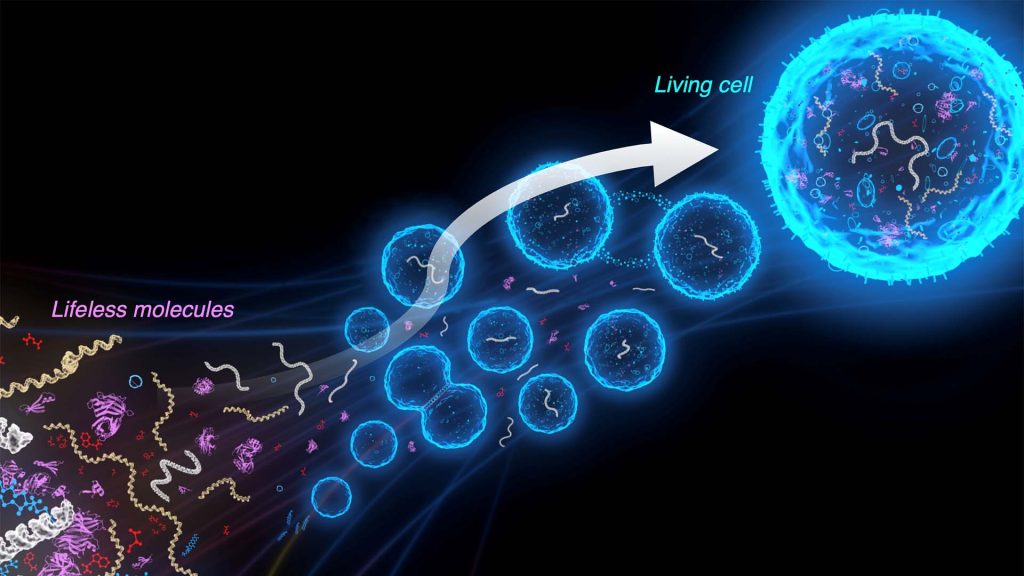
In a groundbreaking moment for science, researchers at the University of Minnesota have successfully built the world's first synthetic cell, dubbed 'SpudCell,' from scratch that can truly eat, grow, replicate its genetic material, and divide, completing a full life cycle. Led by Associate Professors Kate Adamala and Aaron Engelhart, this isn't just another lab creation; it's a meticulously assembled blob from non-living chemicals, pushing the boundaries of what we understand as life itself and opening doors for engineered biology. What makes SpudCell a game-changer is its 'bottom-up' design, sidestepping the traditional method of modifying existing living cells. This minimalist approach, involving a liposome containing synthetic DNA and purified enzymes, allows scientists to precisely understand every component, setting the stage for revolutionary applications in biological engineering, from creating sustainable materials to developing new medicines. While it's still a basic, slow-dividing organism reliant on external feeding and prone to genetic errors, its ability to exhibit selection and competition among variants highlights its profound implications for biofactories and future bioeconomy initiatives. Looking ahead, the team is launching Biotic, a public-benefit research institution, to make their synthetic cell engineering tools globally accessible, fostering collaborative advancements. This move signals a commitment to accelerating research into everything from low-carbon factories to customized agricultural solutions. While SpudCell is far from a fully independent living organism, it serves as a powerful 'chassis' for future innovations, prompting critical discussions on the ethical considerations and regulatory frameworks needed as we inch closer to creating life-like systems.